
The 2026 Winter Olympics brought ice hockey back into the global spotlight with one of the most anticipated tournaments of the Milano Cortina Games. For hockey fans, the return of the world’s leading professional players to the Olympic stage created an atmosphere that had been missing from recent editions. The competition featured elite national teams, established superstars, rising young players, intense rivalries, and dramatic knockout games that kept the tournament unpredictable until the final moments.
The 2026 Winter Olympics ice hockey tournament was especially significant because the men’s competition included NHL players, giving fans the opportunity to watch many of the sport’s biggest names compete together for their countries. Canada, the United States, Finland, Sweden, Czechia, Slovakia, Switzerland, and other strong hockey nations entered the tournament with serious medal ambitions. On the women’s side, the historic rivalry between the United States and Canada once again became the central storyline, eventually producing a dramatic gold-medal contest.
Rather than being remembered simply as another Olympic hockey tournament, Milano Cortina 2026 created several moments that could remain part of Olympic hockey history for years. The men’s final went to overtime, while the women’s gold-medal game also required extra time. Those finishes demonstrated how small the margins were between the world’s strongest teams.
What Made the 2026 Tournament Special?
One of the biggest attractions surrounding the 2026 Winter Olympics ice hockey competition was the return of NHL talent to the Olympic Games. This significantly increased the depth and quality of the men’s tournament. Supporters were able to see elite players who normally compete against one another in professional hockey suddenly become teammates under their national colors.
Canada entered the competition with an extraordinary collection of talent, including Connor McDavid, Nathan MacKinnon, Cale Makar, Mitch Marner, Mark Stone, and several other established stars. The United States also assembled a powerful roster featuring players such as Auston Matthews, Jack Eichel, Quinn Hughes, Jack Hughes, Brady Tkachuk, Matthew Tkachuk, and Connor Hellebuyck.
The presence of these players changed the tactical character of the tournament. Teams could no longer depend simply on experienced systems or defensive structure. They also needed to manage extraordinary individual skill, speed, puck movement, goaltending, and special-teams situations. A single mistake could immediately become a scoring opportunity.
Another important element was the competitive balance. Although Canada and the United States received enormous attention, Finland, Sweden, Slovakia, Czechia, Switzerland, and other teams demonstrated that Olympic hockey could not be treated as a two-team contest. Several games were decided by narrow margins, while overtime became an important feature of the knockout stage.
Men’s Ice Hockey: A Dramatic Olympic Campaign
The men’s tournament featured 12 teams divided into three preliminary groups. Canada, Czechia, France, and Switzerland competed in Group A, Finland, Slovakia, Sweden, and Italy formed Group B, while the United States, Germany, Denmark, and Latvia made up Group C.
The preliminary stage provided an early indication of how competitive the tournament would become. Canada recorded strong victories, including a convincing win over Czechia, while the United States also established itself as one of the leading contenders. Finland and Sweden showed their traditional strength, while Slovakia produced several impressive performances.
The knockout rounds then raised the intensity. Canada defeated Czechia 4–3 in overtime in the quarter-finals, while Finland edged Switzerland 3–2 in overtime. The United States defeated Sweden 2–1 in overtime, and Slovakia advanced with a 6–2 victory over Germany. These results showed just how difficult it was to predict the final medalists.
The semi-finals produced another major North American showdown. Canada defeated Finland 3–2, while the United States beat Slovakia 6–2. That created the final that many fans had expected before the tournament even began: Canada versus the United States for Olympic gold.
The Men’s Gold Medal Game
The men’s final became the defining moment of the 2026 Winter Olympics ice hockey tournament. Canada and the United States met in a game featuring an extraordinary concentration of hockey talent. Both teams had already demonstrated enough quality to reach the championship game, but the final required even greater discipline because every possession carried enormous significance.
The game remained extremely competitive through regulation. Canada scored first, but the United States responded to keep the contest level. Goaltending became particularly important as both teams generated dangerous opportunities without allowing the opposition to gain control.
The game ultimately went to overtime at 1–1. Just 1 minute and 41 seconds into the extra period, Jack Hughes scored the golden goal for the United States. The American team won 2–1 and claimed Olympic gold, ending a long wait for a men’s Olympic hockey championship dating back to the famous 1980 victory.
The result was especially meaningful because of the quality of the opposition. Canada had entered the tournament with one of the deepest rosters in international hockey, but the United States managed to survive the pressure of the final and produce the decisive play when it mattered most.
| Medal | Men’s Ice Hockey | Women’s Ice Hockey |
|---|---|---|
| Gold | United States | United States |
| Silver | Canada | Canada |
| Bronze | Finland | Sweden |
Women’s Ice Hockey: Another USA-Canada Classic
The women’s tournament continued one of the strongest rivalries in international sport. Canada entered as the defending Olympic champion, while the United States arrived with ambitions of reclaiming the gold medal. Other teams, including Finland, Sweden, Switzerland, Czechia, Japan, Germany, France, and Italy, added depth to the competition.
The United States had an outstanding run through the tournament and displayed impressive offensive consistency. Its semi-final against Sweden was particularly convincing, with the Americans winning 5–0 to secure a place in the gold-medal game.
Canada, meanwhile, continued its pursuit of another Olympic title and reached the final after defeating Switzerland. That once again produced the classic Canada–United States matchup that has defined women’s Olympic hockey for decades.
The final was remarkably close. Canada took the lead and appeared capable of defending its advantage, but the United States refused to lose its composure. Hilary Knight scored with the American team using an extra attacker to force overtime, changing the momentum of the contest.
Megan Keller’s Golden Moment
The women’s final became another unforgettable part of the 2026 Winter Olympics ice hockey story. After regulation ended level at 1–1, the championship had to be decided in overtime.
Megan Keller delivered the decisive moment for the United States. At 4:07 of overtime, she scored to give the Americans a 2–1 victory and Olympic gold. The comeback was particularly memorable because the United States had spent much of the game chasing Canada’s early advantage.
The victory gave the American women their third Olympic gold medal in ice hockey, following championships in 1998 and 2018. Canada collected silver, while Sweden won the bronze medal after defeating Switzerland.
The final also highlighted the importance of experience. Players such as Hilary Knight and other established American leaders provided composure during the most difficult moments, while younger contributors helped maintain the pace and intensity required against Canada.
Why the Rivalry Between USA and Canada Matters
The United States and Canada have developed one of the most recognizable rivalries in international ice hockey. Their contests are rarely ordinary games because both nations possess deep hockey traditions, highly developed player-development systems, and generations of Olympic history.
The 2026 tournament strengthened that rivalry even further. Both men’s and women’s finals featured the same matchup, and both championship games ended with the United States winning 2–1. The men’s final required overtime, and the women’s final also went beyond regulation.
For fans, the similarities created an unusual Olympic storyline. The two countries entered the most important games of the tournament with enormous expectations, but the United States ultimately walked away with both gold medals.
Players Who Defined the Tournament
The return of NHL players made the men’s tournament particularly memorable. Several stars carried enormous expectations because they were accustomed to being franchise leaders at the professional level. Representing a country, however, introduces different pressures and responsibilities.
Connor McDavid was one of the biggest names on Canada’s roster, while Nathan MacKinnon, Cale Makar, Mitch Marner, and other elite players added tremendous offensive and defensive quality. On the American side, Auston Matthews, Jack Eichel, Quinn Hughes, Jack Hughes, Matthew Tkachuk, Brady Tkachuk, and Connor Hellebuyck formed a highly talented group.
Jack Hughes ultimately became one of the most memorable figures because his overtime goal decided the men’s championship. His ability to finish the game in a single decisive sequence illustrated why Olympic hockey can be so unpredictable.
The women’s competition had its own collection of influential players. Hilary Knight played an important role in the American comeback, while Megan Keller became the championship hero with her overtime goal. Canada’s experienced roster also demonstrated why the country remains one of the dominant forces in women’s international hockey.
Key Lessons From the 2026 Competition
The 2026 Winter Olympics ice hockey tournament offered several lessons about modern international hockey. First, talent alone does not guarantee a championship. Canada had exceptional individual players in both the men’s and women’s competitions, but the United States found ways to win the decisive games.
Second, goaltending and defensive structure remained crucial. Even with elite offensive talent on the ice, the medal games produced relatively low scores. That demonstrated how effectively the best international teams can limit scoring opportunities when the stakes are highest.
A few characteristics stood out throughout the tournament:
- Overtime pressure: Several knockout games required extra time, showing how narrow the margins were between elite teams.
- Star power: The return of NHL players dramatically increased interest in the men’s competition.
- Rivalry: USA versus Canada once again dominated the biggest championship storylines.
- Young talent: Emerging players showed they could perform alongside established international stars.
The Importance of Olympic Hockey for the Sport
Olympic hockey provides something that professional leagues cannot completely reproduce: players from different teams temporarily unite behind one national identity. A professional season lasts for months and is built around club rivalries, but the Olympics compresses the entire experience into a short international tournament.
That makes every game more meaningful. Players have limited opportunities to represent their countries at the Olympic level, and a career may include only one or two realistic chances to compete for a gold medal. The pressure therefore extends beyond ordinary performance statistics.
The 2026 edition also demonstrated how valuable international competition can be for younger players. Sharing the ice with established stars gives emerging athletes an opportunity to learn at the highest level. It can also accelerate their development by exposing them to different systems, coaching philosophies, and styles of play.
How the 2026 Tournament Could Influence Future Hockey
The impact of the 2026 Winter Olympics ice hockey tournament is likely to extend beyond the medal ceremonies. The successful return of NHL participation on the men’s side demonstrated the enormous audience interest created when the strongest professional players compete internationally.
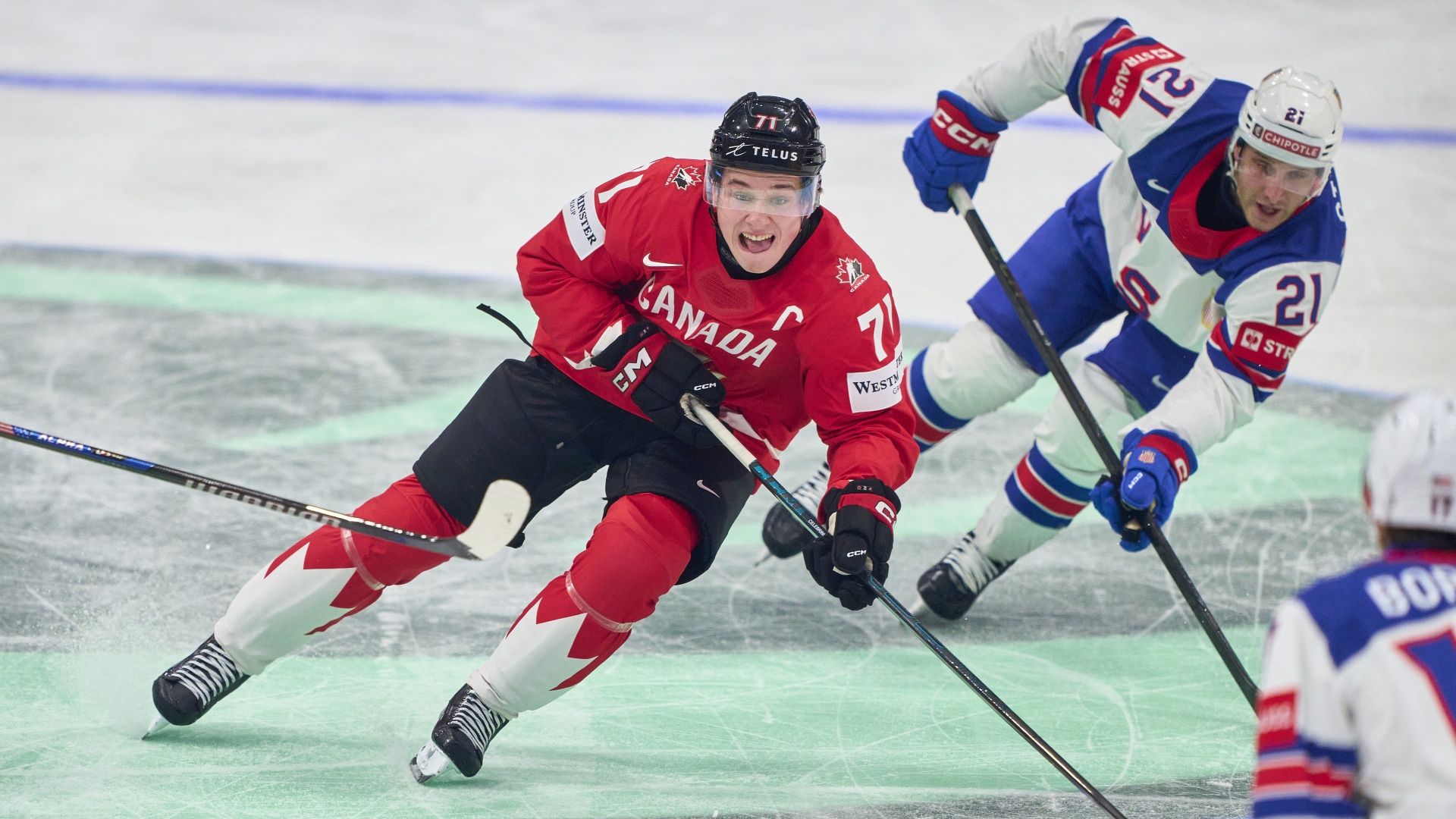
For national teams, the tournament also provided useful information about roster construction. Speed, versatility, puck possession, defensive awareness, and high-level goaltending were all essential. Coaches had to create systems capable of maximizing superstar talent without sacrificing team structure.
The results may also influence future debates about international hockey. Fans clearly value games involving the strongest possible rosters, particularly when traditional rivals meet in championship situations. The popularity of the tournament reinforces the idea that international hockey is at its best when national teams can bring together their strongest available players.
What Fans Will Remember Most
The most memorable part of the 2026 Winter Olympics ice hockey competition will likely be the two championship games. Both ended 2–1, both involved the United States and Canada, and both required overtime to determine the winner.
For the American men, Jack Hughes provided the winning goal in overtime. For the American women, Megan Keller delivered the decisive finish. Those two moments created a rare Olympic coincidence in which the same nation defeated the same rival for both men’s and women’s hockey gold.
Beyond the final scores, fans will remember the return of elite professional talent, the intensity of the knockout rounds, the performances of experienced veterans, and the emergence of younger stars. The tournament demonstrated that Olympic hockey remains capable of producing sporting moments that extend well beyond the final statistics.
Conclusion
The 2026 Winter Olympics ice hockey tournament delivered exactly what international hockey fans hoped to see: elite players, historic rivalries, high-pressure games, dramatic overtime finishes, and unforgettable championship moments. Milano Cortina provided a stage where established stars and emerging talents could compete for something different from a professional championship—the opportunity to win for their country. The United States ultimately dominated the biggest headlines by winning both men’s and women’s gold medals. The men defeated Canada 2–1 in overtime through Jack Hughes’ golden goal, while the women produced an equally dramatic 2–1 overtime victory over Canada, with Megan Keller scoring the championship winner.