
The Indian Premier League continues to be one of the most closely followed T20 cricket competitions, bringing together leading international players, established Indian stars, emerging talent, and some of the strongest franchise teams in the game. The 2026 edition was the 19th season of the tournament, and the competition delivered a full campaign of league-stage battles followed by high-pressure playoff matches. For fans searching for 2026 IPL matches, the season offered an extensive fixture list across multiple Indian venues, with afternoon and evening games creating plenty of opportunities to follow the action.
The 2026 season began on March 28 and the league stage concluded on May 24, with 70 league matches scheduled before the playoffs. The official schedule was released in phases because of election-related considerations, with the second phase covering the remaining 50 league fixtures from April 13 to May 24. The season eventually reached its conclusion on May 31, when Royal Challengers Bengaluru defeated Gujarat Titans in the final at the Narendra Modi Stadium.
For anyone reviewing the 2026 IPL matches after the completion of the tournament, the season is particularly useful to examine through its schedule, venues, league-stage structure, playoff progression, and important results. Rather than focusing only on individual scorecards, looking at the entire competition provides a clearer picture of how the season developed from its opening fixture to the final.
How the 2026 IPL Season Was Structured
The 2026 IPL followed the familiar franchise-based T20 format, with the league stage providing the majority of the competition before the playoff phase determined the finalists. The official schedule covered 70 league matches, with games distributed across a wide selection of Indian cricket venues. Matches were generally scheduled at 3:30 PM IST for afternoon fixtures and 7:30 PM IST for evening fixtures, while double-header weekends added extra cricket to the calendar.
The opening phase consisted of 20 matches between March 28 and April 12. Those fixtures were spread across 10 venues, including Bengaluru, Mumbai, Guwahati, New Chandigarh, Lucknow, Kolkata, Chennai, Delhi, Ahmedabad, and Hyderabad. The remaining 50 league fixtures were then played between April 13 and May 24 across 12 venues. This structure meant that supporters in different regions had opportunities to watch home games while teams also had to adapt to different pitch, weather, and ground conditions.
Opening Match and Early Fixtures
The 2026 tournament opened with Royal Challengers Bengaluru facing Sunrisers Hyderabad at the M. Chinnaswamy Stadium in Bengaluru. RCB entered the season as defending champions, making the opening fixture particularly significant for the franchise and its supporters. The first phase also included several traditional high-profile matchups, including clashes involving Chennai Super Kings, Mumbai Indians, Kolkata Knight Riders, Rajasthan Royals, Gujarat Titans, Delhi Capitals, and other established franchises.
Early-season fixtures are often important because teams are still developing their combinations. Players returning from international assignments have to adjust to the T20 environment, while franchises assess batting orders, bowling combinations, overseas-player selections, and tactical options. Consequently, the opening portion of the 2026 IPL matches schedule was not simply about collecting points; it was also a period in which teams established the combinations that would shape their campaigns.
Complete League-Stage Schedule Overview
The official fixture list ran from Match 1 through Match 70. The following table highlights the structure of the latter portion of the league stage and shows how the competition moved toward its final round.
| Match | Date | Fixture | Venue |
|---|---|---|---|
| 44 | May 2 | CSK vs MI | Chennai |
| 45 | May 3 | SRH vs KKR | Hyderabad |
| 46 | May 3 | GT vs PBKS | Ahmedabad |
| 47 | May 4 | MI vs LSG | Mumbai |
| 48 | May 5 | DC vs CSK | Delhi |
| 49 | May 6 | SRH vs PBKS | Hyderabad |
| 50 | May 7 | LSG vs RCB | Lucknow |
| 51 | May 8 | DC vs KKR | Delhi |
| 52 | May 9 | RR vs GT | Jaipur |
| 53 | May 10 | CSK vs LSG | Chennai |
| 54 | May 10 | RCB vs MI | Raipur |
| 55 | May 11 | PBKS vs DC | Dharamshala |
| 56 | May 12 | GT vs SRH | Ahmedabad |
| 57 | May 13 | RCB vs KKR | Raipur |
| 58 | May 14 | PBKS vs MI | Dharamshala |
| 59 | May 15 | LSG vs CSK | Lucknow |
| 60 | May 16 | KKR vs GT | Kolkata |
| 61 | May 17 | PBKS vs RCB | Dharamshala |
| 62 | May 17 | DC vs RR | Delhi |
| 63 | May 18 | CSK vs SRH | Chennai |
| 64 | May 19 | RR vs LSG | Jaipur |
| 65 | May 20 | KKR vs MI | Kolkata |
| 66 | May 21 | GT vs CSK | Ahmedabad |
| 67 | May 22 | SRH vs RCB | Hyderabad |
| 68 | May 23 | LSG vs PBKS | Lucknow |
| 69 | May 24 | MI vs RR | Mumbai |
| 70 | May 24 | KKR vs DC | Kolkata |
The official schedule also included a change to the Gujarat Titans versus Chennai Super Kings fixtures. The April 26 meeting was moved to Chennai as an afternoon game, while the reverse fixture on May 21 was shifted to Ahmedabad and scheduled for the evening. The change was announced because of municipal corporation elections in Ahmedabad and other parts of Gujarat.
Major Venues Used During IPL 2026
One of the defining features of the 2026 IPL matches calendar was its broad geographic spread. Teams played in several major cricket cities, while some franchises used more than one home venue during the competition. Bengaluru, Mumbai, Chennai, Kolkata, Delhi, Ahmedabad, Hyderabad, Lucknow, Jaipur, Dharamshala, Raipur, and New Chandigarh were among the venues used during the season.

Different grounds can create different tactical challenges. A venue with a traditionally high-scoring surface may encourage aggressive batting, while slower conditions can increase the importance of spin and change-of-pace bowling. Evening matches can also introduce factors such as dew, making the toss and bowling strategy relevant. These variations make a long IPL campaign different from a short knockout competition because teams must repeatedly adjust to changing conditions.
Home Advantage and Venue Changes
Home fixtures are important in the IPL because players become familiar with pitch characteristics, boundary dimensions, local weather, and typical match conditions. However, the 2026 schedule also demonstrated that home advantage is not always restricted to one permanent stadium. Rajasthan Royals, Punjab Kings, and Royal Challengers Bengaluru had multiple home venues during portions of the season.
For supporters, these venue arrangements also expanded access to live cricket. The tournament’s Fan Park program complemented the stadium experience by taking live screenings and IPL-related activities to cities across India. The 2026 Fan Park program included locations across numerous states and continued through the league phase.
Why the League Stage Was Important
The league stage determines which teams continue into the playoffs, making every fixture potentially significant. A strong start can provide momentum, but the long schedule also tests squad depth. Injuries, player availability, workload management, changing combinations, and performances under pressure can all influence a team’s progress.
For fans following 2026 IPL matches, the final weeks were especially important because teams were competing for playoff positions while others were attempting to remain in contention. Matches scheduled close together can create rapid changes in the standings, meaning one result may alter the context of subsequent games. This is one reason IPL schedules generate interest even when two teams are not directly competing for the same playoff position.
The final league fixtures were completed on May 24. Match 69 featured Mumbai Indians against Rajasthan Royals, while Kolkata Knight Riders and Delhi Capitals played Match 70 later that day in Kolkata. The official IPL record confirms that these were the final two league-stage matches of the 2026 season.
The 2026 IPL Playoff Stage
After the league stage, attention shifted toward the playoffs. The knockout phase brought together the leading teams from the competition and created a much different environment from the long league schedule. There was less room for recovery after a poor performance, and tactical decisions became increasingly important.
The 2026 playoff sequence included Qualifier 1, the Eliminator, Qualifier 2, and the final. Royal Challengers Bengaluru and Gujarat Titans met in Qualifier 1, while Sunrisers Hyderabad and Rajasthan Royals contested the Eliminator. Gujarat Titans then faced Rajasthan Royals in Qualifier 2 to determine the second finalist. The official IPL records list these playoff matches between May 26 and May 29.
The 2026 IPL Final
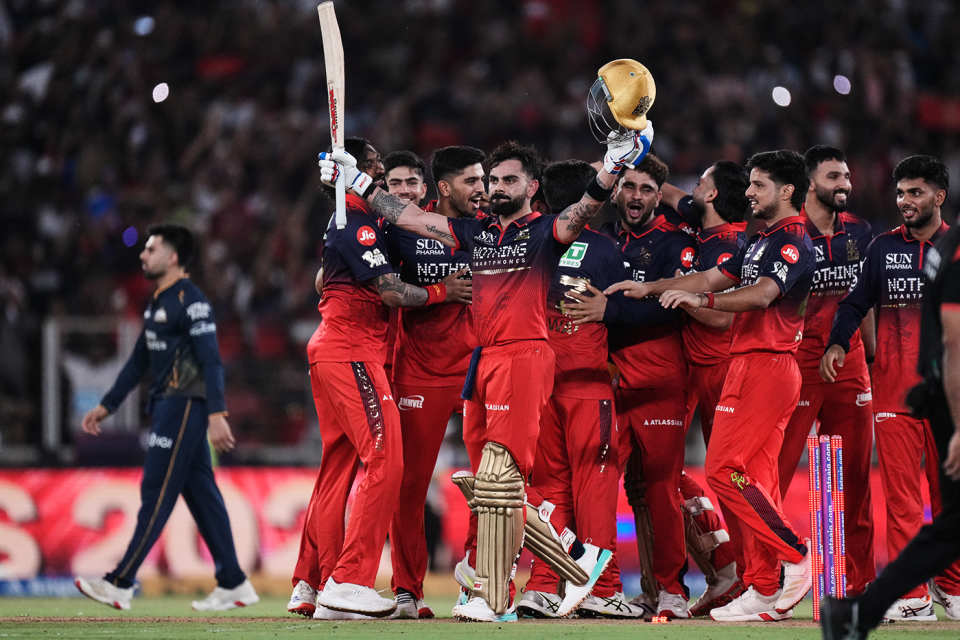
The final was played on May 31 at the Narendra Modi Stadium, with Royal Challengers Bengaluru taking on Gujarat Titans. Gujarat Titans scored 155/10 after batting first, while RCB chased the target successfully, reaching 161/5 with 12 balls remaining. The result gave Royal Challengers Bengaluru a five-wicket victory and their second IPL title.
The final also added another important chapter to the tournament’s history. According to the official IPL match report, RCB became the third franchise after Chennai Super Kings and Mumbai Indians to successfully retain the IPL title. The result therefore carried significance beyond the individual match, particularly because it marked another championship for a team that had entered the season as defending champions.
What Made the 2026 IPL Season Notable?
The overall story of the 2026 IPL matches was shaped by several elements rather than one individual performance. The tournament combined a large league schedule, multiple venues, afternoon and evening fixtures, changing team strategies, and a playoff race that eventually produced a final between RCB and Gujarat Titans.
Some of the key elements that defined the season included:
- A 70-match league stage followed by the playoffs.
- Matches hosted across major Indian cricket venues.
- A phased schedule announced around election-related considerations.
- RCB successfully defending its IPL championship in the final.
The schedule itself also showed how modern IPL planning has to account for logistical and civic factors. The BCCI initially announced only the first phase before confirming the remainder of the league calendar. Later, individual fixtures were adjusted when local election schedules required changes.
How Fans Can Look Back at the 2026 Matches
With the season now completed, fans searching for 2026 IPL matches can examine the competition in several ways. Match schedules provide the chronological structure, while results reveal how teams progressed through the campaign. Looking at individual scorecards can help identify decisive batting and bowling performances, whereas reviewing the playoff pathway provides a broader understanding of how the finalists emerged.
Another useful approach is to compare home and away performances, particularly for franchises that used multiple venues. The different conditions across India meant that adaptability remained an important part of the season. A team that performed consistently across different surfaces and cities could handle challenges that were less relevant in a short tournament played at only one or two grounds.
The season can also be viewed from a player-development perspective. IPL campaigns give younger domestic players opportunities to compete alongside established international cricketers. Strong performances can increase a player’s visibility and create opportunities beyond the league itself. This combination of established stars and emerging players remains one of the defining characteristics of the competition.
Key Takeaways From IPL 2026
The completed 2026 IPL matches season provides a useful snapshot of how a modern franchise T20 competition operates. The tournament began with an opening fixture between RCB and SRH, progressed through 70 league games, and eventually moved into a four-match playoff structure before the final. The league stage was spread across numerous Indian venues, while scheduling changes demonstrated the need to respond to circumstances outside cricket itself.
The final result added a memorable ending to the campaign. RCB defeated Gujarat Titans by five wickets on May 31 to retain the championship, completing a season that had started with the franchise carrying the expectations associated with being defending champions. For followers reviewing the 2026 IPL matches, the complete journey from the March opener through the May final offers a much richer picture than looking at isolated games.
Conclusion
The 2026 IPL season brought together a packed league calendar, major cricket venues, competitive fixtures, tactical adjustments, and a high-stakes playoff stage. From the opening match in Bengaluru to the final in Ahmedabad, the competition provided nearly two months of franchise cricket before Royal Challengers Bengaluru finished the campaign as champions. The official schedule confirms that the league stage contained 70 matches, while the playoffs determined the two teams that eventually contested the final.

