
Cricket has produced many memorable rivalries, but few offer the combination of history, skill, entertainment and contrasting playing styles seen in India and the West Indies. Both teams have made significant contributions to international cricket, creating unforgettable moments across Test matches, One Day Internationals (ODIs) and Twenty20 Internationals (T20Is). India is known for its technically strong batters, quality spin bowling and passionate cricket following, while the West Indies has traditionally been associated with powerful batting, athletic fielding and exceptional fast bowling.
The india vs west indies rivalry connects different generations of cricket fans. From the West Indies’ dominance during the golden era of Test cricket to India’s rise as a major force across all formats, their encounters have reflected the changing nature of the sport. Modern matches add another dimension through aggressive T20 batting, innovative bowling strategies and young players eager to establish themselves internationally. Whether the teams meet in a bilateral series or a major tournament, their contests provide opportunities for individual brilliance, tactical battles and exciting finishes.
History of the India and West Indies Cricket Rivalry
The rivalry between India and the West Indies developed over several decades, with early encounters helping establish the Caribbean side as one of the most formidable teams in world cricket. The West Indies enjoyed a particularly strong period during the 1970s and 1980s, when their outstanding pace attacks and accomplished batters dominated international cricket. India, meanwhile, gradually strengthened its position through disciplined batting, talented spin bowlers and the emergence of influential players who helped transform the national team’s ambitions.
One of the most significant aspects of this history is the contrast between the teams’ traditional strengths. West Indies cricket produced legendary fast bowlers and destructive batters capable of changing matches in a short period. India developed a reputation for technically skilled batters, resourceful spinners and strong performances on subcontinental pitches. These differences made their encounters strategically interesting, particularly when Caribbean power met Indian patience and precision.
Over time, India became increasingly competitive in overseas conditions, while West Indies cricket continued producing exciting talents in both international and franchise competitions. The rivalry evolved alongside changes in training, fitness, technology and match preparation. Today, its historical significance remains an important part of the appeal for supporters following every new series.
Recent India vs West Indies Series and Match Results
Recent encounters have demonstrated how competitive the teams can be, especially when batting-friendly conditions allow both sides to score quickly. In the September 2026 ODI series in India, the hosts won the first two matches before West Indies responded with a five-wicket victory in the third ODI. The five-match T20I series that followed produced similarly dramatic contests, including a successful chase of 250 by the Caribbean team in Ranchi.
The latest T20I series has highlighted the importance of finishing games under pressure. India have shown their ability to build substantial totals, but West Indies have demonstrated that aggressive batting and partnerships can overcome even imposing targets. The fourth T20I in Hyderabad was another example: West Indies scored 247/3 before bowling India out for 223, winning by 24 runs. With the series level at 2–2, the fifth T20I in Bengaluru on October 17, 2026, is scheduled to decide the series.
These results show why fans continue to follow the india vs west indies contest closely. A strong start does not guarantee victory, and teams must maintain their discipline throughout the innings. The ability to adapt to changing match situations, use the right bowlers at the right time and make sound decisions during the final overs often determines the outcome.

Head-to-Head Comparison Across Cricket Formats
India and West Indies have competed in all three major international formats, with each presenting different challenges. Test cricket rewards patience, technical skill and endurance over several days. ODI cricket requires a balance between building an innings and accelerating at the right time, while T20I cricket places greater emphasis on rapid scoring, flexible bowling plans and effective fielding.
The balance between the teams varies according to format, venue and the players available for selection. India have generally been a formidable opponent in modern bilateral cricket, particularly at home, while West Indies remain dangerous in limited-overs matches because of their power-hitting ability. Historical records should always be assessed separately by format, since a team’s success in Tests does not automatically predict its performance in T20Is.
| Comparison factor | India | West Indies |
|---|---|---|
| Traditional strength | Technical batting and spin bowling | Fast bowling and powerful batting |
| Test cricket approach | Patience, partnerships and tactical control | Pace, aggression and resilience |
| ODI approach | Batting depth and calculated acceleration | Attacking stroke play and flexible combinations |
| T20I approach | Explosive top order and varied bowling | Power hitting and aggressive run chases |
| Key tactical priority | Control the middle overs and limit boundaries | Maintain scoring momentum and exploit matchups |
| Main challenge | Consistency under pressure | Sustaining performance across conditions |
The table provides a general comparison rather than a complete statistical record. Team combinations, pitch conditions and current form can change the strengths of either side. Supporters looking at head-to-head numbers should compare wins, losses, draws or ties separately for Tests, ODIs and T20Is to understand the rivalry more accurately.
Key Players Who Can Influence the Contest
Individual performances frequently shape the outcome of matches between these sides. India have produced celebrated batters and bowlers across generations, including Sunil Gavaskar, Sachin Tendulkar, Rahul Dravid, Virat Kohli and Jasprit Bumrah. Their careers represent different aspects of the game, from technical batting and consistency to modern fast-bowling precision. Newer players also bring aggressive stroke play and the flexibility needed for shorter formats.
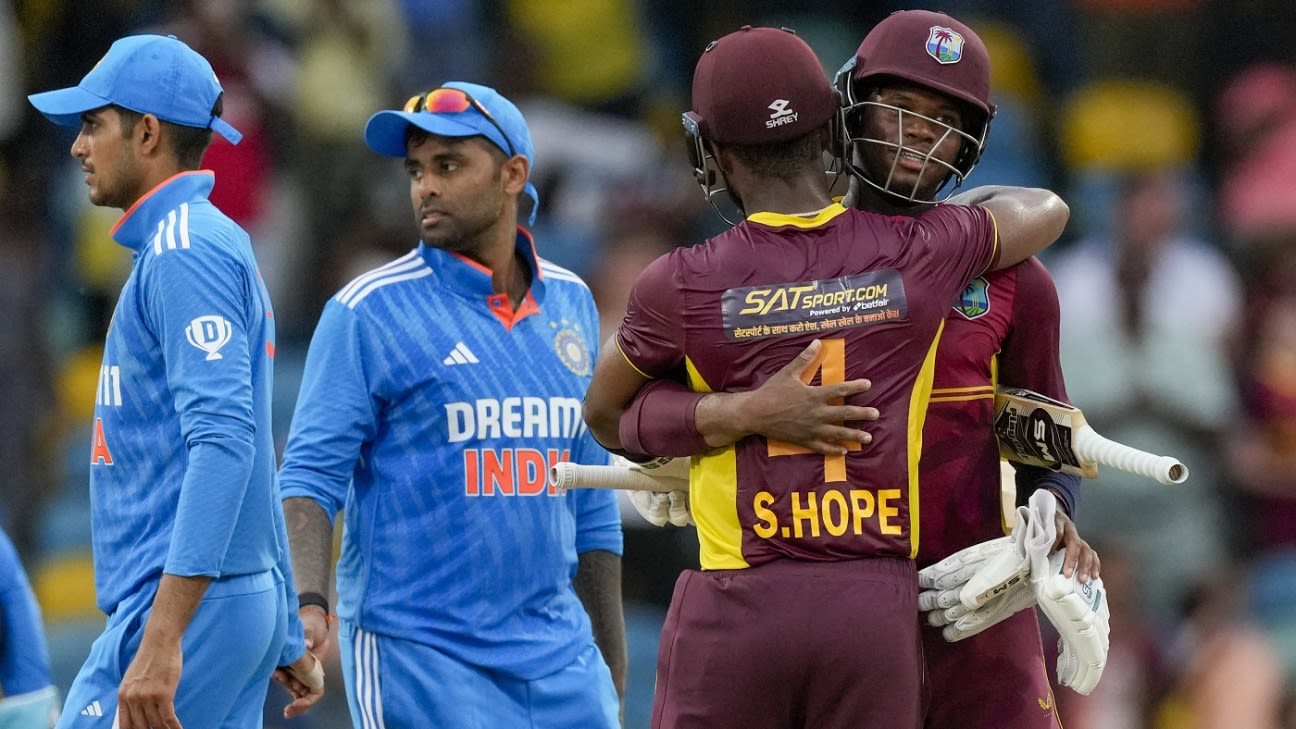
West Indies have an equally rich tradition of outstanding performers. Viv Richards, Brian Lara, Courtney Walsh, Curtly Ambrose and Chris Gayle are among the famous names associated with Caribbean cricket. In the modern game, players such as Shai Hope, Shimron Hetmyer, Sherfane Rutherford and Romario Shepherd offer different strengths, including calculated batting, powerful hitting and useful contributions across phases of a match.
During the October 2026 T20I series, Hope’s unbeaten 102 and Rutherford’s 84 helped West Indies complete a remarkable chase in Ranchi. Their performances illustrated how partnerships can change the momentum of a contest even after early wickets.
Several factors make an individual player especially important:
-
Top-order batters: They establish the scoring rate and provide a foundation for the innings.
-
Middle-order players: They must rebuild after wickets or accelerate when the team needs quick runs.
-
Fast bowlers: They can take early wickets, control the final overs and disrupt the opposition’s rhythm.
-
Spin bowlers: They help manage the middle overs and exploit batters who struggle against changes of pace.
-
All-rounders: They offer balance by contributing with both bat and ball.
The most valuable player is not always the one who scores the most runs or takes the most wickets. A timely partnership, a difficult catch or a disciplined spell can be equally decisive.
Pitch Conditions and Their Impact on Match Results
Pitch conditions play a major role in determining the strategy for both teams. Indian grounds can offer different challenges depending on the surface, weather and amount of moisture in the pitch. Some venues provide good bounce and pace, making stroke play easier, while others assist spinners as the match progresses. Batters must judge conditions quickly and adapt their approach rather than rely entirely on aggressive hitting.
Caribbean venues also offer a variety of conditions. Certain pitches provide pace and bounce for fast bowlers, while slower surfaces demand patience and careful shot selection. Teams touring overseas must adjust their techniques and bowling plans to suit local conditions. This ability to adapt is particularly important in Test matches and ODI series, where players have more time to assess how the surface behaves.
In the india vs west indies rivalry, captains must consider the toss, boundaries, dew and the strengths of their bowling attacks before finalising their plans. On a high-scoring surface, bowlers need accurate yorkers, slower deliveries and well-planned field placements. On a slower pitch, changes of pace and spin may become more effective. Successful teams identify these conditions early and avoid following a fixed strategy when the match situation changes.
Tactical Battles Between Batting and Bowling
The most interesting aspect of international cricket is the contest between a batter’s intentions and a bowler’s plans. India’s batting approach often combines technical control with attacking stroke play, while West Indies can apply pressure through aggressive boundary hitting. However, both teams are capable of adjusting their tactics according to the opposition and match conditions.
In limited-overs cricket, powerplay overs are especially important. Batters attempt to score quickly while fielding restrictions are in place, whereas bowlers seek early wickets to prevent a strong platform. During the middle overs, captains may introduce spin or use changes of pace to slow scoring. The final overs then become a test of execution, with batters looking for boundaries and bowlers trying to restrict scoring through accurate deliveries.
Important tactical considerations include:
-
Building partnerships instead of depending on one batter.
-
Rotating the strike to prevent long periods without scoring.
-
Using bowlers according to individual matchups.
-
Protecting boundary areas while maintaining opportunities for wickets.
-
Managing pressure during the final overs of a chase.
-
Maintaining composure after losing quick wickets.
These details help explain why the india vs west indies contests can change direction rapidly. A team that appears to be in control can lose momentum after two or three wickets, while a well-established partnership can transform a difficult chase into a realistic target.
Why Fans Enjoy This Cricket Rivalry
The appeal of these matches extends beyond the final score. Indian supporters bring enormous enthusiasm to international cricket, while West Indies fans celebrate the Caribbean team’s distinctive style and rich cricketing heritage. Both sides have produced generations of players whose performances remain important to the sport’s history.
The rivalry also appeals to different types of cricket followers. Test cricket enthusiasts appreciate technical skill, endurance and tactical decisions over several days. ODI fans enjoy the combination of measured batting and late acceleration, while T20I audiences are drawn to sixes, fast scoring and dramatic finishes.
The modern india vs west indies rivalry also provides opportunities for emerging players to establish themselves. Young cricketers can gain experience against international opponents, learn to manage pressure and develop the skills required for major tournaments. For fans, each series offers a chance to discover future stars alongside established performers.
What to Watch in Upcoming Matches
As both teams continue competing internationally, several factors will influence their future encounters. India’s priorities include improving consistency across batting and bowling, managing pressure during difficult chases and finding effective ways to contain powerful hitters. West Indies will aim to maintain their attacking identity while developing greater consistency across different venues and formats.
Supporters following upcoming matches should pay attention to:
-
Recent form: Current performances often provide more useful context than historical reputation alone.
-
Team selection: Injuries, workload management and player availability can change the balance of a side.
-
Venue conditions: Pitch behaviour and weather may influence the toss and team strategy.
-
Partnerships: Sustained partnerships can be more important than isolated individual performances.
-
Death-over execution: Bowling accuracy and batting decisions often determine close limited-overs matches.
These factors provide a practical framework for understanding future games without assuming that either team will always dominate. Cricket remains unpredictable, and preparation, adaptability and execution frequently matter more than reputation.
Conclusion
The India and West Indies cricket rivalry combines historical importance with the excitement of modern international cricket. From the West Indies’ celebrated dominance in earlier decades to India’s emergence as a consistent contender across formats, both teams have contributed memorable performances and remarkable players to the game.
The india vs west indies matchup remains compelling because of its contrasting styles, tactical challenges and capacity for unexpected results. India’s technical batting and varied bowling resources meet the Caribbean side’s power, aggression and ability to change a game quickly. Recent encounters have reinforced the importance of partnerships, bowling discipline and composure under pressure.
As future series unfold, fans can expect new individual milestones, competitive team performances and opportunities for emerging players. Whether the contest takes place in Test cricket, ODIs or T20Is, its lasting appeal comes from the uncertainty of the result and the quality of cricket both teams can produce.

