
The India vs South Africa Test rivalry is one of the most competitive matchups in international cricket. Both teams have developed strong cricketing traditions, produced world-class players, and delivered memorable performances across different conditions. India is widely recognised for its technically skilled batters, quality spin bowlers, and growing pace attack, while South Africa has traditionally been known for its fast bowlers, athletic fielders, and resilient batting line-up. When these teams meet in Test cricket, every session can influence the direction of the match.
Test cricket tests a team’s patience, discipline, adaptability, and mental strength over several days. Unlike limited-overs formats, players must build innings carefully, manage their energy, and adjust their strategies according to pitch conditions. The india vs south africa test contest is particularly interesting because both sides must overcome different challenges when playing at home or away. Indian conditions can reward spin bowling as matches progress, whereas South African pitches often provide pace, bounce, and movement. These differences make the rivalry a valuable subject for cricket fans who enjoy tactical analysis and traditional five-day cricket.
History of the India and South Africa Test Rivalry
South Africa and India have shared a fascinating Test cricket history since their first official Test series in 1992–93, following South Africa’s return to international cricket after the apartheid-era sporting isolation. The early encounters helped establish a competitive relationship between two teams with different cricketing strengths. India brought experienced batters and skilled spin bowlers, while South Africa relied on disciplined fast bowling, strong fielding, and technically sound batting.
Over the years, the rivalry has evolved considerably. India has invested in developing fast bowlers capable of succeeding outside the subcontinent, while South Africa has continued to produce talented pace bowlers and determined middle-order batters. The result has been a series of hard-fought contests in which home advantage often plays an important role.
The india vs south africa test rivalry has also reflected the changing balance of international cricket. Indian teams have become increasingly competitive in overseas conditions, and South African teams have remained difficult opponents on their home grounds. Memorable individual performances, close finishes, and demanding batting conditions have ensured that matches between these sides attract attention from cricket enthusiasts around the world.
Head-to-Head Record in Test Cricket
Head-to-head statistics provide useful context when evaluating two international teams. Overall results, home and away performances, draws, and series outcomes can reveal how the rivalry has developed. However, historical records should always be considered alongside the era in which matches were played, because pitches, equipment, playing styles, and team combinations have changed over time.
India has traditionally enjoyed greater success against South Africa in home conditions, where familiar pitches and spin-friendly surfaces can benefit its bowling attack. South Africa, meanwhile, has historically been particularly challenging to defeat at home. Its pace bowlers can exploit bounce and movement, while its batters are accustomed to handling quicker surfaces.
The following table summarises the main categories fans can examine when researching this matchup. Exact totals change as new matches are played, so current figures should be verified against an up-to-date scorecard or official cricket statistics database.
|
Statistical category |
What it reveals |
|---|---|
|
Total Test matches |
The overall size of the rivalry |
|
India wins |
India’s historical success |
|
South Africa wins |
South Africa’s historical success |
|
Drawn matches |
Games without a decisive result |
|
Home record |
Performance in familiar conditions |
|
Away record |
Ability to adapt overseas |
|
Highest team total |
Strongest batting performance |
|
Best bowling figures |
Outstanding individual bowling |
|
Leading run-scorers |
Consistent batting contributions |
|
Leading wicket-takers |
Long-term bowling effectiveness |
These categories help readers understand more than the final result of a single match. A team might have a strong overall record but struggle in a particular country. Similarly, an individual player can have an excellent career average while finding certain conditions difficult. Looking at several statistics together provides a more balanced understanding of the rivalry.

Indian Players Who Have Shaped the Rivalry
India’s success in Test cricket has been built on contributions from exceptional batters, versatile all-rounders, and increasingly effective fast bowlers. Players such as Sachin Tendulkar, Rahul Dravid, Virat Kohli, and Rohit Sharma have contributed to different generations of Indian batting. Their approaches differ, but each has demonstrated the importance of concentration, technical preparation, and the ability to build an innings under pressure.
Sachin Tendulkar’s long international career included several notable performances against South Africa. Rahul Dravid was known for his defensive technique and patience, qualities that are especially important when facing high-quality fast bowling. Virat Kohli brought an aggressive approach, intense fitness standards, and an appetite for scoring runs in challenging conditions. Other players have contributed through crucial partnerships, lower-order resistance, and match-winning centuries.
India’s bowling development has also influenced the contest. Fast bowlers such as Jasprit Bumrah and Mohammed Shami have demonstrated how pace, accuracy, and reverse swing can challenge established batting line-ups. Indian spinners remain important, especially on turning surfaces where flight, variation, and control can create pressure.
In an india vs south africa test, individual brilliance matters, but sustained teamwork is equally important. A batter’s century may establish a strong position, yet the bowlers must still take 20 wickets to secure a conventional Test victory. India’s strongest performances have generally combined batting partnerships with disciplined bowling and reliable fielding.
South African Players and Their Contributions
South Africa has produced numerous outstanding Test cricketers who have made the rivalry highly competitive. Jacques Kallis, Graeme Smith, Hashim Amla, AB de Villiers, Dale Steyn, and Kagiso Rabada represent different aspects of the country’s cricketing strength. Their performances have helped establish South Africa as a formidable Test opponent across generations.
Jacques Kallis was one of the most accomplished all-rounders in Test history, combining substantial run-scoring ability with useful seam bowling. Graeme Smith became known for his leadership and determination at the top of the order. Hashim Amla brought composure and technical excellence, while AB de Villiers demonstrated adaptability and a broad range of scoring options.
South Africa’s bowling tradition has been equally influential. Dale Steyn was renowned for his pace, swing, and ability to generate wickets in important moments. Kagiso Rabada has continued the country’s tradition of high-quality fast bowling, using speed, accuracy, and aggression to challenge batters.
When South Africa plays India, its fast bowlers often seek early breakthroughs, especially in conditions that encourage seam movement. The batting line-up must then provide enough runs to support the bowlers. Successful South African performances usually depend on maintaining pressure throughout the match rather than relying on one outstanding session.
The Importance of Pitch and Weather Conditions
Pitch conditions can dramatically affect the balance of a Test match. In India, surfaces may initially offer good opportunities for batting before becoming increasingly favourable to spin bowling. The extent of turn depends on the ground, soil composition, weather, and how the pitch develops during the match. Teams must therefore decide whether to prioritise extra spin options or select a balanced attack featuring both pace and spin.
South African pitches often offer more bounce and assistance for fast bowlers, although conditions vary between venues. New-ball movement can make the opening overs difficult for batters, particularly when the ball swings through the air or moves off the surface. As the pitch settles, players who defend carefully and leave deliveries outside off stump can build valuable innings.
Weather also matters. Cloud cover may assist swing bowling, while rain can reduce playing time and increase the likelihood of a draw. Heat and humidity can influence player stamina, and the condition of the ball affects how bowlers approach different phases of an innings.
For fans analysing the india vs south africa test, checking the venue, recent pitch behaviour, and weather forecast can help explain team selections and match strategies. Conditions do not determine the result on their own, but they strongly influence which skills become most valuable.
Batting Strategies in Test Matches
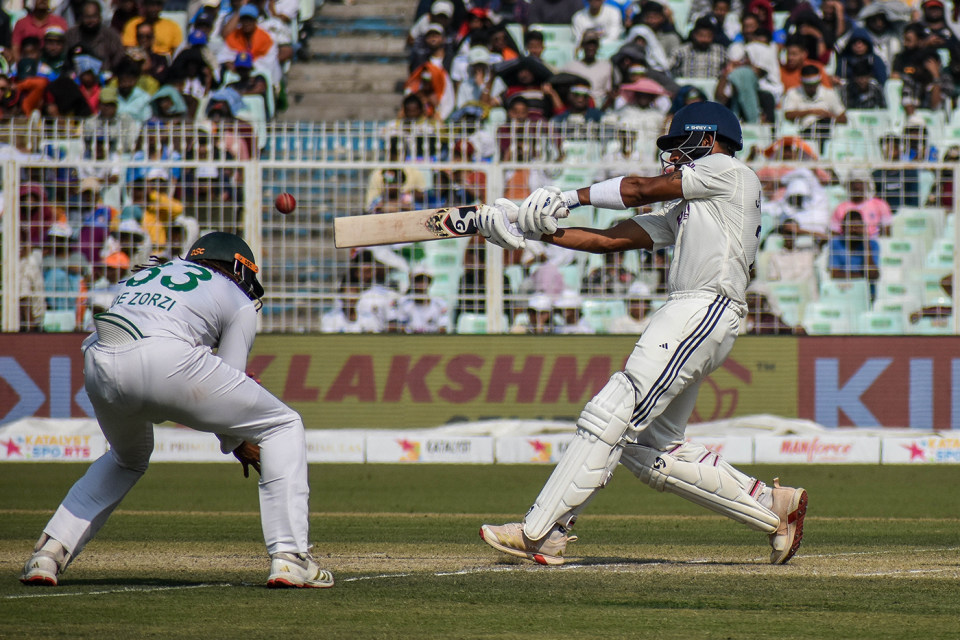
Successful Test batting requires patience, sound judgement, and the ability to adapt. Players must decide which deliveries to defend, which to leave, and when to score. A batter who attempts to dominate every over can lose a wicket unnecessarily, while excessive defensiveness may allow bowlers to maintain pressure without taking risks.
Against South African fast bowlers, Indian batters need to manage the bounce and movement of the ball. Playing close to the body, maintaining balance, and avoiding unnecessary drives can help reduce the risk of edges. Scoring through controlled cuts, pulls, and well-timed straight shots becomes important when opportunities appear.
Indian pitches present a different challenge for South African batters. As spin becomes more influential, footwork and shot selection are essential. Batters must judge the length early, use their feet when appropriate, and avoid allowing spinners to dictate the pace of the game.
Important batting principles include:
-
Build partnerships rather than relying entirely on individual scores.
-
Respect difficult spells from the opposition’s best bowlers.
-
Rotate the strike to prevent pressure from building.
-
Adjust shot selection to suit the pitch and match situation.
-
Protect wickets when conditions favour the bowling side.
-
Accelerate when the team needs to establish a declaration target.
These methods are especially useful in long matches, where maintaining concentration over several sessions can be as important as technical ability.
Bowling Strategies and Wicket-Taking Plans
Test bowling involves much more than delivering the ball quickly. Bowlers must establish consistent lines and lengths, create uncertainty, and work together to dismiss batters. Captains use field placements to encourage particular shots while protecting areas where batters score most comfortably.
South African fast bowlers may target the corridor outside off stump, looking for movement that produces edges to the wicketkeeper or slip fielders. Shorter deliveries can be effective when used selectively, especially against batters who struggle with bounce. However, excessive short bowling can allow opponents to score freely if the field is not set appropriately.
Indian bowlers may rely on a combination of seam movement, changes of pace, and spin. On turning surfaces, spinners can attack both edges of the bat, while fast bowlers can use reverse swing or targeted spells to break partnerships. Bowling changes must also reflect fatigue, the condition of the ball, and the possibility of taking wickets before the next break.
A strong bowling attack generally requires:
-
Consistent line and length.
-
Clear plans for each batter.
-
Effective use of the new ball.
-
Partnerships between bowlers.
-
Smart field placements.
-
Patience when wickets do not come immediately.
The best bowling performances are often those in which several players contribute rather than one bowler carrying the entire workload.
Key Factors That Can Decide the Match
Several elements can determine the outcome of a Test between India and South Africa. The toss may influence the initial decision to bat or bowl, particularly when the pitch is expected to change significantly. Nevertheless, winning the toss does not guarantee success because conditions can evolve differently from expectations.
The first innings is often crucial. A team that posts a competitive total can place pressure on its opponent, especially if the pitch begins to deteriorate. Equally, an early batting collapse can change the entire match by allowing the opposition to control the tempo.
Fielding is another major factor. Dropped catches, missed run-out opportunities, and misfields can give important batters additional chances. In a format where matches may be decided by small margins, even one missed opportunity can have a significant impact.
|
Key factor |
Potential impact |
|---|---|
|
Opening partnership |
Establishes a stable batting platform |
|
Fast bowling |
Creates early breakthroughs |
|
Spin bowling |
Exploits deteriorating surfaces |
|
Middle-order batting |
Resists pressure and rebuilds innings |
|
Fielding quality |
Prevents unnecessary runs and creates wickets |
|
Captaincy |
Influences declarations and tactical decisions |
|
Fitness and stamina |
Supports performance over five days |
|
Lower-order runs |
Can change the balance of a close contest |
Teams that handle these areas consistently are more likely to maintain control throughout a demanding five-day match.
Why Fans Enjoy India vs South Africa Test Cricket
The appeal of this rivalry comes from its contrasting styles and the challenges each team presents to the other. India brings a strong tradition of spin bowling and technically accomplished batting, while South Africa has frequently relied on fast bowling, athletic fielding, and determined batting performances. These strengths create tactical battles that can develop gradually over several days.
Fans also enjoy watching experienced players face emerging talent. Established batters must adapt to new bowling threats, while young players have opportunities to prove themselves against high-quality opposition. A debutant’s first innings, a fast bowler’s spell with the new ball, or a determined fourth-innings chase can become a defining moment.
Test cricket offers a different kind of excitement from shorter formats. A match can appear settled before a sudden collapse changes the situation. A seemingly modest partnership can become decisive, and a team under pressure can recover through patience and determination.
The india vs south africa test matchup also attracts interest because results provide insight into a team’s ability to perform beyond familiar conditions. Winning away from home requires preparation, resilience, and the ability to adapt to unfamiliar pitches. Those challenges are part of what makes Test cricket rewarding for players and spectators alike.
Conclusion
India and South Africa have built a compelling Test cricket rivalry through outstanding individual performances, competitive series, and contrasting approaches to the game. India’s batting depth, developing pace attack, and spin resources offer different strengths from South Africa’s fast-bowling tradition, disciplined batting, and athletic fielding.
Understanding the rivalry involves looking beyond the final score. Head-to-head results, player records, pitch conditions, batting partnerships, bowling strategies, and fielding performances all contribute to the bigger picture. Each venue creates a different challenge, and the team that adapts most effectively often gains the advantage.
For cricket enthusiasts, the india vs south africa test remains an engaging contest because it rewards patience, tactical thinking, and consistent execution. Whether played on a spin-friendly Indian surface or a lively South African pitch, this matchup demonstrates the enduring appeal of Test cricket and the high standards required to succeed at the international level.

