
The cricket rivalry between the West Indies and India has produced memorable contests across Test cricket, One Day Internationals (ODIs) and Twenty20 Internationals (T20Is). Both teams have developed distinctive playing styles, talented players and passionate supporters, making their meetings an important part of international cricket. Fans following the west indies cricket team vs india national cricket team match scorecard often want more than the final result. They also look for batting scores, wickets, bowling figures, partnerships, extras and the turning points that shaped the contest.
India is widely recognised for its technically skilled batters, varied bowling attack and strong performances across formats. The West Indies, meanwhile, have a rich cricketing history associated with powerful batting, fast bowling and exceptional white-ball talent. Understanding a match scorecard helps readers evaluate how each side performed, identify standout players and understand why a team won or lost. A complete analysis should combine numerical statistics with the match situation, pitch conditions and the performances that influenced the result.
History of the India and West Indies Cricket Rivalry
India and the West Indies have competed in international cricket for decades. Their Test rivalry dates back to India’s early years in international cricket, while their ODI and T20I meetings reflect the evolution of the modern game. The West Indies enjoyed a dominant period in international cricket during the 1970s and 1980s, building a reputation for outstanding fast bowling and formidable batting line-ups. India subsequently established itself as a major force through generations of accomplished batters, spinners, fast bowlers and all-rounders.
Over the years, matches between these teams have demonstrated how cricket strategies change with conditions and formats. Test matches reward patience, concentration and sustained bowling pressure. ODIs require a balance between building partnerships and scoring at a competitive rate, while T20Is place greater emphasis on power-hitting, adaptable bowling and rapid decision-making. Reviewing the west indies cricket team vs india national cricket team match scorecard helps readers understand these differences through runs, wickets, overs and individual contributions.
Latest Match Scorecard: West Indies vs India
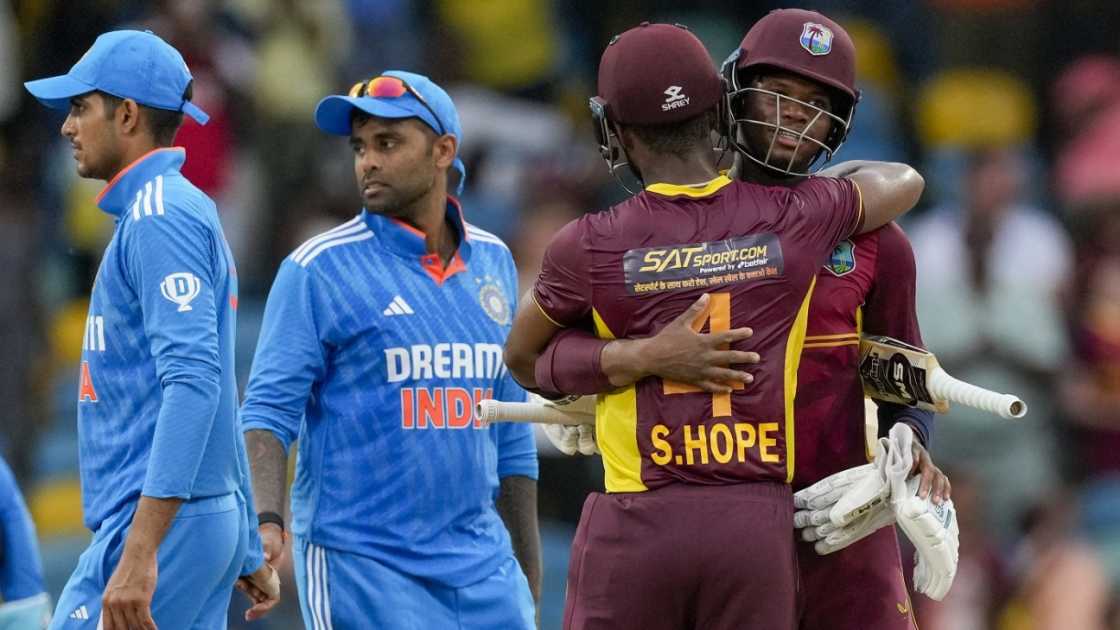
A recent example of this rivalry came in the fourth T20 International at Hyderabad on 14 October 2026. West Indies delivered a powerful batting performance before defending their total successfully against India. Captain Shai Hope led the innings with an unbeaten century, while Keemo Paul produced a decisive bowling spell during India’s chase. The result brought the five-match T20I series level at 2–2, setting up an important final match.
The west indies cricket team vs india national cricket team match scorecard for this contest highlights the importance of partnerships, scoring momentum and taking wickets at crucial moments. West Indies reached a formidable total of 247 runs for three wickets in 20 overs. India responded with 223 runs for nine wickets in 19.3 overs, falling short by 24 runs. The scorecard illustrates how a strong batting total can create pressure and how disciplined bowling can prevent a chasing team from recovering after losing key players.
Match Summary Table
| Match detail | Information |
|---|---|
| Match | India vs West Indies, 4th T20I |
| Date | 14 October 2026 |
| Venue | Rajiv Gandhi International Stadium, Hyderabad |
| West Indies score | 247/3 in 20 overs |
| India score | 223/9 in 19.3 overs |
| Result | West Indies won by 24 runs |
| West Indies top scorer | Shai Hope, 102* |
| India’s notable batter | Sanju Samson, 56 |
| Best bowling performance | Keemo Paul, 5 wickets for 41 runs |
| Series situation | Level at 2–2 |
Match details based on published match reports and the official cricket governing body’s coverage.
West Indies Batting Performance
West Indies established a strong platform by scoring 247 runs for three wickets. Shai Hope’s unbeaten century was the defining contribution, combining controlled stroke play with aggressive scoring. His innings demonstrated the value of a batter who can remain at the crease while maintaining a high scoring rate. Sherfane Rutherford also contributed valuable runs, helping West Indies sustain their momentum and finish with a total that placed considerable pressure on India’s batting line-up.
A score of 247 in a T20 International requires both a productive start and effective acceleration during the middle and final overs. West Indies managed to keep wickets in hand while continuing to find boundaries. This gave the team flexibility in the closing stages of its innings. India’s bowlers struggled to restrict the scoring sufficiently, and the visitors entered the second innings with a substantial total to defend. Hope’s performance also demonstrated the importance of leadership, as the captain set the tempo for the innings and remained unbeaten at the finish.
Key West Indies Batting Figures
| Batter | Runs | Balls |
|---|---|---|
| Shai Hope | 102* | 50 |
| Sherfane Rutherford | 49 | 26 |
| West Indies total | 247/3 | 20 overs |
The table highlights the principal batting contributions rather than reproducing every individual scorecard entry.
India Batting Performance
India began the chase knowing that a high scoring rate would be essential. Sanju Samson provided an attacking contribution with 56 runs from just 23 balls, giving the home side a promising start. His innings helped India remain in contention, but the challenge was to sustain that momentum throughout the innings. Against a demanding target, every over without sufficient runs increased the required scoring rate.
The West Indies bowling attack responded by taking wickets at important moments. Once India’s early momentum weakened, the remaining batters faced increasing pressure to score quickly without losing further wickets. Tilak Varma also contributed with the bat, but India could not build a partnership strong enough to bring the required target within reach. The innings ended at 223 for nine in 19.3 overs, leaving the team 24 runs short. The result underlined how even a quick half-century can prove insufficient when the required run rate remains high and wickets fall regularly.
Key India Batting Figures
| Batter | Runs | Balls |
|---|---|---|
| Sanju Samson | 56 | 23 |
| Tilak Varma | 43 | 25 |
| India total | 223/9 | 19.3 overs |
Bowling Analysis and Match Turning Points
Keemo Paul delivered the most decisive bowling performance of the match, taking five wickets for 41 runs. His spell disrupted India’s pursuit and prevented the batting side from building the partnerships required to chase the target. Taking five wickets in a T20 International is a significant achievement because batters typically look to score aggressively throughout the innings. Paul’s ability to break partnerships made him one of the central figures in the West Indies victory.
India, meanwhile, needed more effective control during the West Indies innings. Restricting a powerful batting side requires accurate bowling, effective field placement and an ability to vary pace and length. When a team scores heavily during the final overs, bowlers can find it difficult to recover the runs conceded earlier. India’s chase also showed that a team can produce individual batting performances yet still lose if the bowling attack allows too many runs and the batters fail to maintain partnerships.
The main turning points included:
-
Hope’s unbeaten century, which gave West Indies a commanding total.
-
Rutherford’s contribution, which helped sustain the scoring momentum.
-
Samson’s attacking half-century, which initially gave India hope.
-
Paul’s five-wicket haul, which changed the direction of the chase.
-
India’s inability to maintain a consistent scoring rate while preserving wickets.
How to Read a Cricket Match Scorecard
A cricket scorecard provides a structured record of a match. It shows how many runs each team scored, how many wickets fell and how individual players contributed. For readers following the west indies cricket team vs india national cricket team match scorecard, understanding the basic statistics makes it easier to interpret the result and compare performances across different formats.
The batting section normally records runs, balls faced, boundaries and the method of dismissal. The bowling section lists overs, maidens where applicable, runs conceded and wickets taken. Extras include wides, no-balls, byes and leg-byes, depending on the match. The innings total combines the batters’ runs with applicable extras.
Important terms include:
-
Runs: The total scored by a batter or team.
-
Balls faced: The number of deliveries a batter has received.
-
Strike rate: Runs scored per 100 balls faced.
-
Economy rate: Average runs conceded by a bowler per over.
-
Wickets: Dismissals recorded during the innings.
-
Overs: The sets of legal deliveries bowled by a team.
-
Extras: Runs added through deliveries or situations not credited directly to a batter.
These statistics allow readers to evaluate performance beyond the final score. For example, a batter scoring 50 runs from 25 balls has contributed at a different pace from one scoring 50 from 45 balls. Similarly, a bowler taking three wickets economically may have a greater impact than one conceding many runs while taking the same number of wickets.
Differences Between Test, ODI and T20 Scorecards
The format of a match changes how its scorecard should be interpreted. Test cricket can last up to five days, allowing teams to bat for multiple innings. Batting endurance, bowling consistency and the ability to exploit changing pitch conditions are central to the result. A comparatively modest run rate may be acceptable when a team is building a long innings.
ODI cricket normally consists of 50 overs per side. Teams must balance preserving wickets with scoring quickly enough to create a competitive total. Partnerships and the acceleration during the final overs can strongly influence the outcome. Bowling economy, middle-over wickets and finishing ability are important elements of ODI analysis.
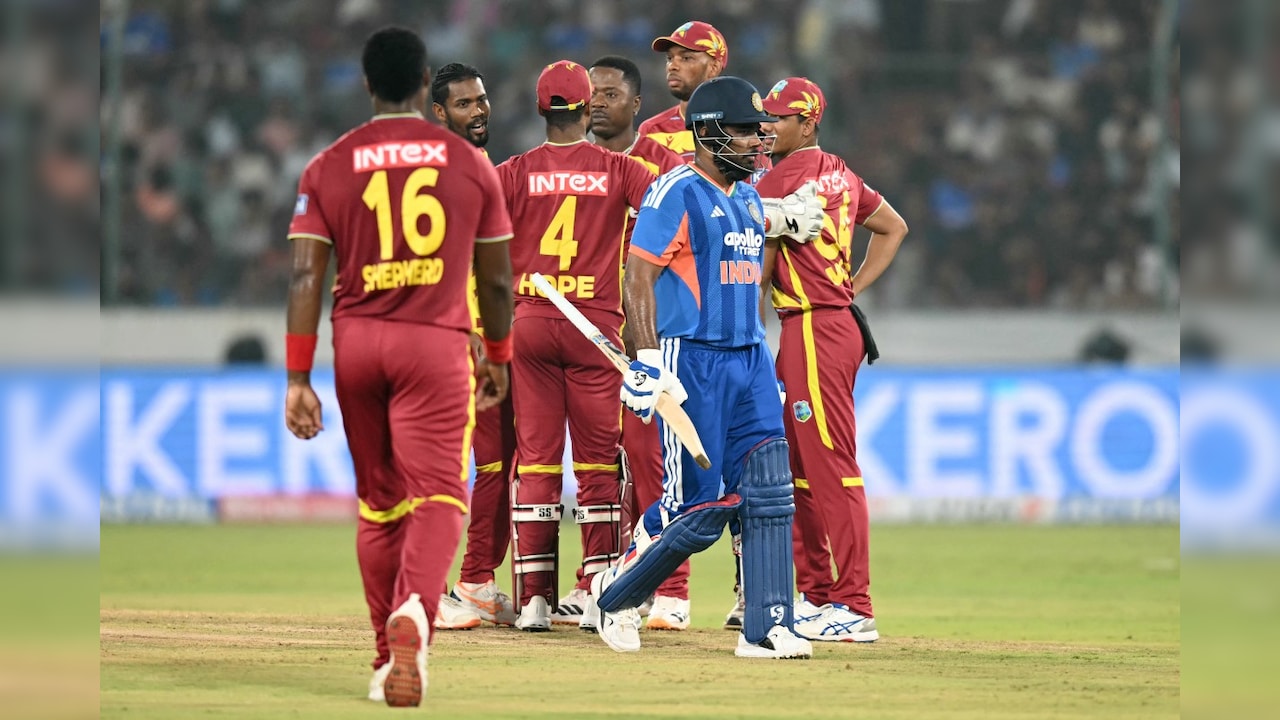
T20 cricket uses a maximum of 20 overs per side, so every over has greater significance. Batters often prioritise boundaries, while bowlers use variations to restrict scoring and take wickets. The Hyderabad match demonstrated these pressures, with West Indies scoring 247/3 and India finishing on 223/9. The scorecard reveals both the scale of the target and the difficulty of maintaining a successful chase.
Players Who Can Influence India vs West Indies Matches
Both teams have access to players who can change the direction of a game through individual brilliance. For India, top-order batters can establish a strong foundation, middle-order players can accelerate the scoring and bowlers can create pressure by taking wickets. All-rounders provide additional flexibility by contributing in both departments, while spinners can be particularly influential when the surface offers grip.
West Indies have traditionally placed considerable emphasis on explosive batting and athletic fielding. Their batters can transform an innings through powerful hitting, while fast bowlers and adaptable all-rounders can disrupt opposition plans. In T20 cricket, the balance between aggressive batting and controlled bowling is especially important because even a short period of poor execution can change a match.
When analysing any contest, readers should consider more than the leading run-scorer or wicket-taker. Partnerships, fielding contributions, bowling economy and performances under pressure can be equally important. A complete scorecard analysis identifies how these elements combine to produce the final result.
What Fans Should Check in a Full Scorecard
For a complete understanding of a match, readers should review the following information:
-
Match date, venue and format.
-
Toss result and the decision to bat or bowl.
-
Playing elevens and any announced replacements.
-
Individual batting scores and dismissal details.
-
Bowling figures, including overs, runs and wickets.
-
Extras, innings totals and fall of wickets.
-
Partnerships that changed the match.
-
Player-of-the-match recognition and the final result.
Checking these details is particularly useful when comparing different India–West Indies contests. Two matches may have similar totals but very different outcomes because of the pitch, weather, target, required run rate or quality of bowling. The west indies cricket team vs india national cricket team match scorecard becomes more informative when the figures are considered alongside these match conditions.
Conclusion
The West Indies and India cricket rivalry continues to provide compelling contests across Test matches, ODIs and T20 Internationals. Their fourth T20I in Hyderabad on 14 October 2026 illustrated how powerful batting and timely wickets can decide a close series contest. Shai Hope’s unbeaten century helped West Indies reach 247/3, while Keemo Paul’s five-wicket haul played a decisive role in India’s eventual total of 223/9. West Indies won by 24 runs, bringing the series level at 2–2.
For cricket followers, studying the west indies cricket team vs india national cricket team match scorecard is an effective way to understand individual contributions, batting momentum, bowling effectiveness and the factors behind the result. By examining the innings totals, partnerships, wickets and match situation together, readers can gain a clearer understanding of how both teams performed and why one side gained the advantage.

