
Athletics brings together some of the simplest and most demanding forms of sport: running faster, jumping farther, throwing farther and enduring longer. At the highest level, these disciplines become a showcase of preparation, technique, speed, strength and mental control. The world athletics championships represents the premier global outdoor championship for track and field, marathon and race-walking athletes, bringing competitors from nations across the world together to compete for world titles.
The championship has developed considerably since its first edition in Helsinki in 1983. What began with around 1,300 athletes from 153 countries has grown into a major international sporting event featuring thousands of competitors and dozens of medal events. The 2025 edition in Tokyo was the 20th edition, with 49 events scheduled across nine days from September 13 to 21.
For fans, the appeal goes beyond the medal table. Sprint finals can be decided by tiny margins, distance races can involve complex tactical battles, while field events often change dramatically with a single attempt. The championship also creates opportunities for established stars and emerging athletes to establish themselves on the biggest stage in athletics.
What Are the World Athletics Championships?
The world athletics championships is organized by World Athletics, the international governing body responsible for the sport. It serves as a global championship where athletes compete for individual and team honors across track events, field events, road races and combined events. Unlike a regular athletics meeting, where athletes may be chasing times, rankings or qualification marks, a world championship places particular emphasis on progressing through rounds and performing at the right moment.
The first edition was held in Helsinki in 1983. The first three championships were staged at four-year intervals, but the event moved to a biennial schedule following the success of the 1991 edition in Tokyo. The change gave athletes more regular opportunities to compete for outdoor world titles while keeping the championship separate from the Olympic athletics competition.
The scale of the event has also expanded. Budapest 2023 featured about 2,100 athletes from 195 countries, compared with the 1,333 athletes from 153 countries who competed in Helsinki in 1983. This growth reflects the increasing global reach of athletics and the development of the sport across different regions.
A Look at the Major Event Categories
One of the strengths of the championship is the variety of disciplines. A spectator can move from a 100-meter sprint lasting only a few seconds to a marathon requiring extraordinary endurance and tactical patience. This variety means that athletes with very different physical profiles and training methods can all compete for the same level of global recognition.
The 2025 programme contained 49 events, including 24 women’s events, 24 men’s events and one mixed event. The programme covered track races, field competitions, combined events, road races and relays.
| Category | Examples of Events | Main Skills Tested |
|---|---|---|
| Sprints | 100m, 200m, 400m | Speed, reaction, power |
| Middle & Long Distance | 800m, 1500m, 5000m, 10,000m | Endurance, pace, tactics |
| Hurdles & Steeplechase | 100m/110m hurdles, 400m hurdles, 3000m steeplechase | Speed, rhythm, technique |
| Field Events | Long jump, high jump, pole vault, shot put, javelin | Power, coordination, technique |
| Combined Events | Heptathlon, decathlon | Versatility across disciplines |
| Road Events | Marathon, 20km and 35km race walks | Endurance, pacing, efficiency |
| Relays | 4x100m, 4x400m | Speed, teamwork, baton exchanges |
Track Events Create Some of Athletics’ Biggest Moments
Track races are often the most immediately recognizable part of the championship. Sprint events such as the 100m and 200m can attract enormous attention because the outcome is determined in seconds. Athletes need explosive acceleration, efficient mechanics and the ability to maintain maximum speed under intense pressure.
Middle-distance and long-distance races require a different approach. In events such as the 1500m, 5000m and 10,000m, athletes must balance speed with energy conservation. A competitor may spend much of the race positioned carefully within the pack before accelerating at a decisive moment. This makes tactics almost as important as physical conditioning.
Hurdles introduce another layer of technical difficulty because athletes must combine running speed with precise movement over barriers. The steeplechase adds water jumps and barriers, making it one of the most visually distinctive endurance events. Relay races add teamwork to the equation, particularly in the 4x100m, where baton exchanges can have a major effect on the final result.
Field Events Reward Technique as Much as Power
Field events demonstrate that athletics is not simply about raw physical strength. A world-class thrower, jumper or vaulter needs highly refined technique to convert physical ability into measurable performance. In the long jump, for example, the approach speed, takeoff angle, body position and landing technique all contribute to the final distance.

Throwing events have similar technical demands. Shot put, discus, hammer and javelin require athletes to generate tremendous force while maintaining balance and controlling the implement. Javelin throwers must coordinate their approach, transition, release and follow-through with remarkable precision.
Vertical jumps create a different challenge. High jumpers must clear a horizontal bar while converting their approach into upward momentum, while pole vaulters use a flexible pole to transform speed into vertical lift. Small technical improvements can produce significant differences at elite level, which is why athletes spend years refining movement patterns.
Combined Events Test Complete Athletic Versatility
The heptathlon and decathlon occupy a special position within the championship because competitors must succeed across several disciplines rather than specializing in just one. The decathlon combines events such as sprinting, jumping, throwing, hurdling and distance running. The heptathlon similarly demands a broad mixture of speed, strength, coordination and endurance.
Success in combined events requires athletes to manage both physical and strategic challenges. A competitor may perform strongly in several events but lose valuable points in an area that is less familiar. Training therefore involves developing a balanced athletic profile instead of concentrating almost exclusively on one movement pattern.
This makes combined-event champions particularly interesting to follow. Their preparation must account for different technical requirements, recovery needs and competition rhythms. The result is a competition that tests versatility as much as individual performance.
How Athletes Qualify for the Championship
Reaching the starting line at a global championship is itself a major achievement. Qualification is structured around entry standards and world rankings, with specific qualification periods established for different events. For Tokyo 2025, the qualification windows varied according to the discipline, while the World Athletics Relays in Guangzhou served as an important qualifying route for relay teams.
This system creates a long qualification journey. Athletes cannot simply depend on one strong performance months before the championship. They need to establish the required level during the appropriate qualification period and then be selected by their national federation. The process can make qualification competitions highly significant because athletes are often competing not only against international rivals but also for limited places within their own national teams.
For fans, qualification also explains why some famous athletes may be absent from a championship. Injury, form, qualification status and national selection decisions can all affect final entries. Consequently, the final field is only confirmed after the qualification and selection processes are completed.
The Importance of World Rankings and Championship Performance
World rankings provide an important framework for comparing athletes across international competitions, but championship competition has its own unique demands. An athlete can produce excellent performances throughout a season and still face a completely different challenge when required to progress through heats, semifinals and finals at a major championship.
Championship racing often rewards athletes who can manage pressure and adapt to changing circumstances. A sprinter must negotiate rounds without unnecessarily wasting energy, while a distance runner may need to respond to tactical changes. Field-event competitors must perform their best attempts when the competition becomes most demanding.
This is one reason championship results can become defining moments in an athlete’s career. A medal represents not just a performance measurement but success against a concentrated field of international competitors on a specific stage.
Historic Stars Who Shaped the Championship
The history of the event is filled with athletes who became global sporting icons. Carl Lewis was one of the standout figures of the inaugural championship in Helsinki, winning the 100m, long jump and 4x100m relay. The 1991 Tokyo championship also produced one of athletics’ most famous rivalries when Lewis and Mike Powell competed in the long jump, with Powell setting the still-standing world record of 8.95m.
Later generations brought their own remarkable performers. Usain Bolt transformed sprinting at the 2009 Berlin championship by setting world records in both the 100m and 200m. Other major championship figures have included distance-running stars, hurdlers, throwers and pole vaulters whose performances have helped define different eras of the sport.
Recent editions have continued that tradition. At Budapest 2023, Noah Lyles won the men’s 100m and 200m, Faith Kipyegon captured the women’s 1500m and 5000m, and several other athletes achieved multiple titles across track and race walking
Tokyo 2025 and the Modern Championship
Tokyo has a particularly important place in championship history. The city hosted the event in 1991 and returned as host in 2025, making Japan the first country to stage the World Championships three times. The 2025 edition was held at the Japan National Stadium from September 13 to 21 and featured 49 events across nine days.
The Tokyo programme was designed to provide a concentrated schedule of competition. Road events were generally held during morning sessions, while many stadium finals were scheduled for evening sessions. The championship featured 14 stadium sessions and ended with the men’s 4x100m relay final.
The 2025 edition also continued a broader trend toward making athletics more accessible to global audiences. Live results, detailed performance information and international broadcasting allow fans to follow events even when they are thousands of kilometres away from the host stadium.
Why the Championship Matters Beyond Medals
The significance of the world athletics championships extends beyond who stands on the podium. For athletes, a successful championship can establish a reputation, attract sponsorship opportunities and provide confidence for future competitions. For developing athletics nations, reaching a final or winning a medal can demonstrate the effectiveness of training systems and inspire younger athletes.
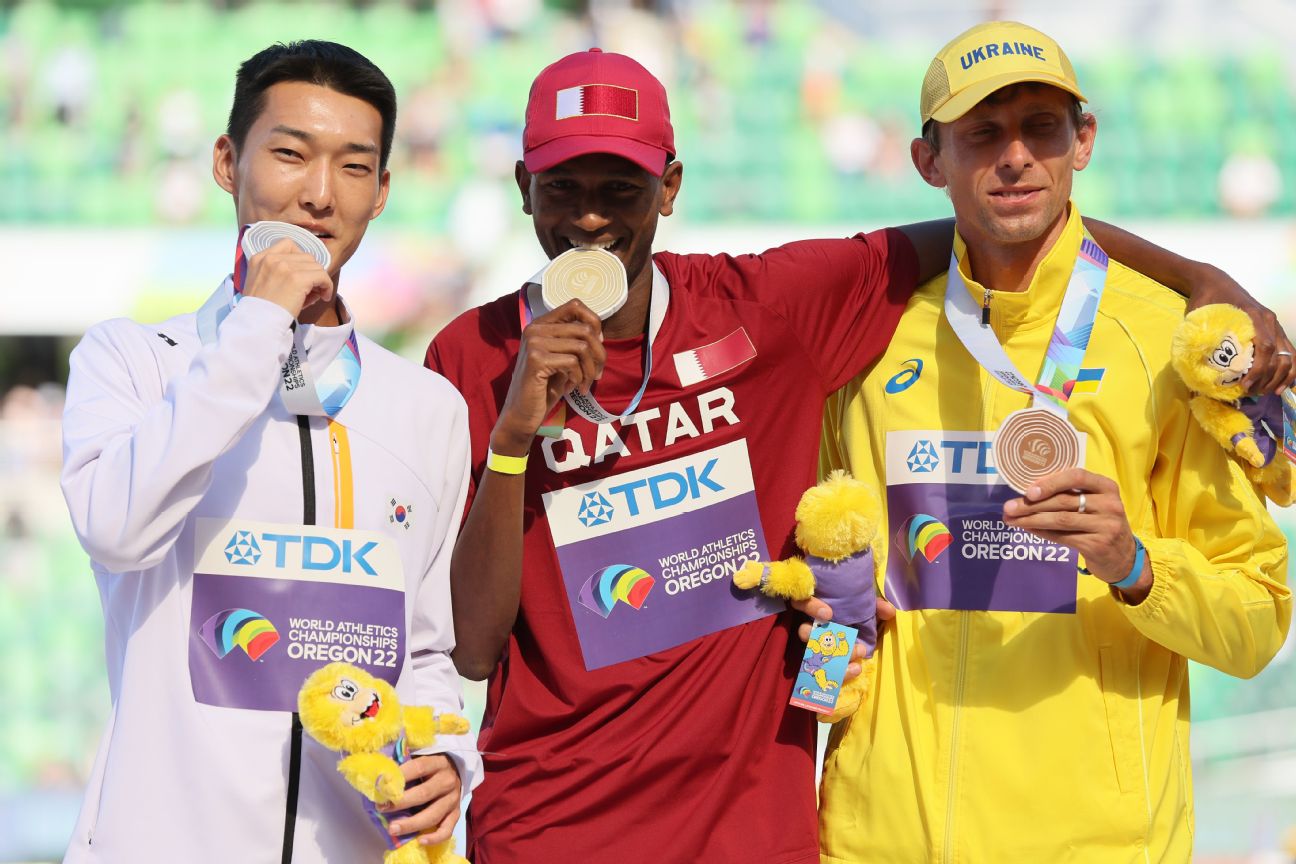
The event also provides a meeting point for different athletics cultures. Competitors from countries with very different sporting traditions can share the same track or field. A distance runner from East Africa, a sprinter from the Caribbean or North America, a jumper from Europe and a thrower from Asia may all become central figures within the same championship.
This international character is one of the defining features of athletics. The basic disciplines are easy to understand, but elite performance depends on years of coaching, scientific preparation, competition experience and personal dedication.
What Fans Should Watch in Future Championships
Future editions will continue to bring together established champions and younger athletes attempting to break into the global spotlight. Several areas are particularly interesting for spectators:
- Emerging athletes challenging established champions.
- New national records and championship records.
- Close sprint and middle-distance finals.
- Technical battles in jumping and throwing events.
- Tactical developments in endurance and road races.
Another important aspect is the continuing development of mixed and team-based events. Relay competitions demonstrate how individual speed can be transformed into collective performance, while mixed relays add another dimension to championship strategy.
Technology is also changing how fans understand athletics. Modern timing systems, detailed split data and performance tracking provide more information than was available to previous generations. This allows spectators to examine not just who won, but how a performance developed throughout a race or competition.
The Growing Global Reach of Athletics
The expansion of the championship demonstrates how athletics has become increasingly global. At the inaugural event in Helsinki, 25 countries won medals, including 13 nations that won gold. By Budapest 2023, 46 countries won medals and 23 countries won gold medals.
That wider distribution matters because athletics does not depend on one particular style of athlete or one geographical region. Different countries have developed particular strengths in sprinting, endurance running, race walking, throwing, jumping or combined events. The championship brings all of these traditions together.
It also creates opportunities for sporting development. Young athletes watching a global championship can see competitors from their own regions competing successfully, making elite athletics appear more accessible and achievable. Over time, those examples can contribute to stronger participation and deeper talent pools.
Conclusion
The world athletics championships has grown from a relatively new global competition into one of the defining events in international athletics. Since Helsinki in 1983, the championship has expanded in participation, event variety and worldwide reach while producing some of the most memorable performances in track and field history. Its biennial format provides athletes with regular opportunities to compete for outdoor world titles while maintaining a distinct identity alongside the Olympic Games. What makes the championship particularly compelling is its variety. A few seconds can determine a sprint champion, while a marathon can unfold over hours. A single jump, throw or vault can transform a field-event competition, and combined-event athletes must maintain consistency across an extraordinary range of disciplines.

