
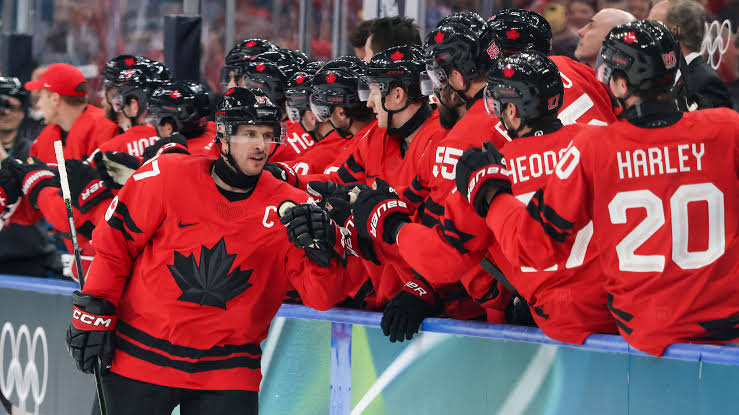
The 2026 Winter Olympics in Milano Cortina delivered a major chapter in international ice hockey, bringing together elite players and national teams in two highly anticipated tournaments. The men’s competition was particularly significant because NHL players returned to the Olympic stage for the first time since 2014, creating an event filled with established stars, international rivalries and high-level competition. The women’s tournament also produced compelling games, with the United States and Canada once again meeting in a dramatic Olympic final.
For fans looking back at the 2026 winter olympics ice hockey competition, the tournament offered much more than individual results. The games showcased different styles of international hockey, from Canada’s physical and structured approach to the speed associated with teams such as the United States, Sweden and Finland. Italy also had the opportunity to compete on home ice, adding another dimension to the tournament atmosphere.
The men’s gold-medal game ended with the United States defeating Canada 2–1 in overtime on February 22, 2026. Finland defeated Slovakia for bronze, while the women’s tournament concluded with the United States defeating Canada 2–1 in overtime on February 19. These results made the Milano Cortina hockey tournaments memorable additions to the Winter Olympic Games.
The Return of NHL Players to Olympic Ice
One of the biggest stories surrounding the 2026 winter olympics ice hockey tournament was the return of NHL players to the men’s Olympic competition. After NHL players were absent from the 2018 and 2022 Winter Games, Milano Cortina represented their first Olympic appearance in 12 years. This significantly changed the character of the men’s event because national teams could select from a much larger pool of elite professional talent.
Players such as Auston Matthews, Jack Eichel, Quinn Hughes and Matthew Tkachuk represented the United States, while Canada featured a collection of highly accomplished NHL players. Sweden had stars including Rasmus Dahlin, Victor Hedman and William Nylander, while Finland, Switzerland, Germany and Slovakia also brought prominent NHL talent. Germany’s Leon Draisaitl and Tim Stützle immediately demonstrated their importance in the tournament, combining for three goals in Germany’s opening 3–1 victory over Denmark.
The return of NHL players also increased the tactical quality of the tournament. International hockey is played on a different competitive stage from the NHL, and national teams have limited time to build chemistry. Coaches therefore had to quickly establish systems, defensive structures and special-teams combinations while integrating players accustomed to different roles in professional hockey.
How the Men’s Tournament Was Structured
The men’s competition featured 12 national teams divided into three preliminary groups. Canada, Czechia, France and Switzerland competed in Group A, Finland, Slovakia, Sweden and Italy formed Group B, while Denmark, Germany, Latvia and the United States were placed in Group C. The preliminary round was followed by qualification playoff games and the quarterfinals, with the tournament eventually narrowing to four semifinalists and the medal games.
This format made every preliminary-round game important. Teams not advancing directly into the quarterfinal stage had to negotiate an additional qualification game, meaning that a strong group performance could provide a valuable advantage. The final stages then brought together the strongest surviving teams in a knockout environment where one difficult period could change an entire tournament.
| Men’s tournament stage | Key matchup/result | Date |
|---|---|---|
| Opening games | Slovakia 4–1 Finland; Sweden 5–2 Italy | February 11, 2026 |
| Quarterfinals | Canada 4–3 Czechia; USA 2–1 Sweden | February 18 |
| Semifinals | Canada 3–2 Finland; USA 6–2 Slovakia | February 20 |
| Bronze medal game | Finland 6–1 Slovakia | February 21 |
| Gold medal game | USA 2–1 Canada, overtime | February 22 |
The knockout phase produced several close contests. Canada needed overtime to defeat Czechia 4–3 in the quarterfinals, while the United States defeated Sweden 2–1. Canada then edged Finland 3–2 in the semifinal, and the United States beat Slovakia 6–2 to reach the gold-medal game.
United States and Canada Meet for Men’s Gold
The defining game of the 2026 winter olympics ice hockey men’s tournament was the gold-medal meeting between the United States and Canada. The matchup carried enormous attention because both countries had assembled teams featuring leading NHL talent. Canada had already shown its strength during the tournament, including a 5–0 victory over Czechia in the preliminary round, while the United States progressed through a competitive field before reaching the final.

The championship game ultimately required overtime. Canada and the United States were tied 1–1 after regulation, setting up a decisive extra period. The United States scored the winning goal to claim a 2–1 victory and Olympic gold. The result gave the American men’s team the tournament title while Canada finished with silver. Finland’s victory over Slovakia secured bronze.
The final also illustrated how narrow the margins can become when two elite teams meet. Earlier games in the tournament sometimes featured substantial score differences, but the championship match was decided by a single overtime goal. That contrast made the final a fitting conclusion to a tournament in which international stars were competing under the pressure of representing their countries.
The Women’s Ice Hockey Tournament
The women’s competition formed an equally important part of the 2026 winter olympics ice hockey program. The tournament began on February 5 and included 10 teams: Canada, Czechia, Finland, France, Germany, Italy, Japan, Sweden, Switzerland and the United States. The teams competed across two preliminary groups before moving into the knockout rounds.
The United States began strongly, defeating Czechia 5–1 and Finland 5–0 before recording a 5–0 win over Switzerland. Canada also produced convincing performances, including a 4–0 victory against Switzerland, a 5–1 win over Czechia and a 5–0 result against Finland. These results helped establish the two North American rivals as central figures in the tournament.
The knockout phase featured several important games. The United States defeated Italy 6–0 in the quarterfinals and Sweden 5–0 in the semifinals. Canada defeated Germany 5–1 before edging Switzerland 2–1 in its semifinal. Sweden later defeated Switzerland 2–1 in overtime to take bronze.
A Dramatic Women’s Final
The women’s gold-medal game between the United States and Canada provided one of the most memorable finishes of the Games. The two teams were tied 1–1 after regulation, forcing overtime. The United States eventually scored the deciding goal and won 2–1, taking Olympic gold. Canada earned silver, while Sweden defeated Switzerland 2–1 in overtime to claim the bronze medal.
The final was particularly significant because of the longstanding Olympic rivalry between the United States and Canada. Their meetings have frequently been among the most anticipated games in women’s international hockey, and Milano Cortina continued that tradition. The closely contested scoreline also demonstrated the small margins separating two programs with extensive Olympic and international experience.
Beyond the medal-winning teams, the tournament also provided important opportunities for other national programs. Japan, Italy, Germany, Czechia, Finland, Switzerland and France all contributed to a competition that continued to expand the international profile of women’s hockey. Italy’s participation was especially notable because the tournament took place on home soil.
Major Teams and Players to Watch
The men’s tournament contained an unusually high concentration of established NHL talent. The United States entered with players such as Auston Matthews, Jack Eichel, Matthew Tkachuk, Brady Tkachuk, Quinn Hughes and Charlie McAvoy. Canada also had a deep collection of NHL stars, while Sweden, Finland, Switzerland, Germany and Slovakia featured players accustomed to playing at the highest professional level.
Several players also became particularly relevant through their tournament performances. Germany’s Draisaitl and Stützle immediately influenced the team’s opening victory, while Switzerland’s Roman Josi and Timo Meier contributed offensively during the preliminary round. Czechia’s Martin Necas also produced a strong performance against Switzerland, recording a goal and two assists in a 4–3 overtime defeat.
Among the teams, the United States combined scoring ability with enough defensive organization to progress through the knockout stages. Canada demonstrated its ability to win tight games, including its overtime quarterfinal victory against Czechia. Finland’s bronze-medal performance also underlined its reputation as a highly competitive international hockey nation.
What Made the 2026 Tournament Different
Several factors made the 2026 winter olympics ice hockey competition different from the preceding two men’s Olympic tournaments. The most obvious was the return of NHL players, but the impact went beyond simply adding famous names. Their participation raised the overall speed, physical intensity and technical quality of the men’s tournament.
The venues in Milano also created a distinctive setting. The men’s tournament used Milano Santagiulia Ice Hockey and Milano Rho Ice Hockey, while the women’s competition was also staged across the two venues. Playing in Italy gave the Games a different atmosphere from previous Winter Olympics and allowed local supporters to experience top-level international hockey directly.
Another notable feature was the number of close games in the knockout stages. Overtime appeared repeatedly, including Canada’s quarterfinal against Czechia, Finland’s quarterfinal against Switzerland, the United States’ quarterfinal against Sweden and both the men’s and women’s gold-medal games. Such finishes highlighted the importance of defensive discipline, goaltending and execution under pressure.
Key Takeaways From the Tournament
- The United States won the men’s Olympic gold medal after defeating Canada 2–1 in overtime.
- Finland captured men’s bronze by defeating Slovakia.
- The United States also won women’s gold, beating Canada 2–1 in overtime.
- Sweden earned women’s bronze after defeating Switzerland in overtime.
- NHL players returned to the men’s Olympics for the first time since 2014.
These results show how closely contested the medal races became. Both men’s and women’s gold-medal games required overtime, while several quarterfinal and semifinal contests were decided by one or two goals.
Why the 2026 Games Matter for International Hockey
The significance of the 2026 winter olympics ice hockey tournament extends beyond the medal table. International hockey benefits when the world’s leading professional players can participate in the Olympics because fans get to see national teams at something close to their strongest possible level. The event also gives emerging hockey nations a chance to share the same stage with established powers.
The men’s tournament demonstrated how much anticipation surrounds NHL participation at the Olympics. For younger players, competing alongside or against established NHL stars provides an important international experience. For fans, it creates rare matchups between players who normally meet only as opponents during the professional season.
The women’s tournament similarly reinforced the strength of the established rivalry between the United States and Canada while showing the continued development of the wider international field. Close games involving Sweden, Switzerland, Finland, Czechia, Germany and other teams contributed to a competition that was not limited to the traditional North American rivalry.
Conclusion
The 2026 winter olympics ice hockey tournaments in Milano Cortina provided two compelling competitions with different but equally significant storylines. The men’s event was defined by the long-awaited return of NHL players to Olympic hockey, while the women’s tournament continued a powerful tradition of elite international competition. Both gold-medal games went to overtime, demonstrating just how closely matched the finalists were when Olympic medals were at stake. The United States ultimately claimed both men’s and women’s gold medals, defeating Canada in overtime in each championship game. Finland and Slovakia contested the men’s bronze medal, while Sweden and Switzerland met for women’s bronze. Across the tournament, fans saw established stars, emerging international talent, dramatic overtime finishes and memorable national-team performances.

