
The India national cricket team and the West Indies cricket team have built one of the most exciting rivalries in international cricket. Their matches bring together different playing styles, experienced campaigners, talented youngsters, and memorable performances across Test matches, One Day Internationals (ODIs), and Twenty20 Internationals (T20Is). For cricket fans, the India national cricket team vs West Indies cricket team match scorecard is an important resource for understanding how a game unfolds, from the opening overs to the final result.
A scorecard provides much more than the total runs scored by each team. It records individual batting contributions, wickets, bowling figures, extras, partnerships, and the number of overs completed. These details help readers identify the players who influenced the contest and understand why one team gained an advantage. Whether India dominates through disciplined bowling or West Indies produces an explosive batting display, the scorecard captures the statistical story behind the match.
Understanding the Match Scorecard
A cricket match scorecard presents the essential information needed to review an international fixture. It normally includes the match date, venue, competition, toss result, innings totals, batting figures, bowling statistics, and final result. In a closely contested game, these details can explain how a team recovered from an early setback or lost momentum during the middle overs.
The India national cricket team vs West Indies cricket team match scorecard can also help fans compare performances across formats. Test cricket focuses on patience, technique, and sustained pressure, while ODIs require teams to balance scoring rates with wicket preservation. T20Is place greater emphasis on aggressive batting, adaptable bowling, and effective fielding. Understanding the format is therefore essential before interpreting individual figures or comparing performances.
Match Scorecard Overview
The following table provides a scorecard template for reviewing an India versus West Indies international match. Because the teams meet in different formats and competitions, the exact scores, players, venue, and result depend on the specific fixture being examined.
| Match Detail | Information |
|---|---|
| Match | India vs West Indies |
| Teams | India national cricket team and West Indies cricket team |
| Format | Test, ODI, or T20I |
| Venue | Depends on the fixture |
| Toss Winner | Confirm from the match report |
| First Innings | Enter the actual team total |
| Second Innings | Enter the actual team total |
| Top Scorer | Confirm from the official scorecard |
| Best Bowling Figures | Confirm from the official scorecard |
| Match Result | Enter the verified result |
| Player of the Match | Confirm from the official match report |
This overview should be completed with verified match information rather than assumed statistics. A scorecard without a match date or format may refer to several different fixtures, so readers should identify the exact game before relying on the numbers.
India Team Performance Analysis
India generally approaches international cricket with a combination of technically skilled batters, versatile all-rounders, and bowlers capable of adapting to different conditions. The team’s batting performance often depends on building partnerships, rotating the strike, and selecting the right moments to accelerate. In longer formats, a stable top order can establish a foundation for a substantial total, while limited-overs matches require quicker scoring without unnecessary dismissals.
When reviewing India’s innings, readers should examine the opening partnership, the contribution of the middle order, and the scoring rate during the final overs. A strong start does not always guarantee a competitive total if wickets fall in clusters. Similarly, a team that loses early wickets can recover through a valuable partnership. The India national cricket team vs West Indies cricket team match scorecard helps identify these turning points through individual scores, dismissal details, and the number of balls faced.
West Indies Team Performance Analysis
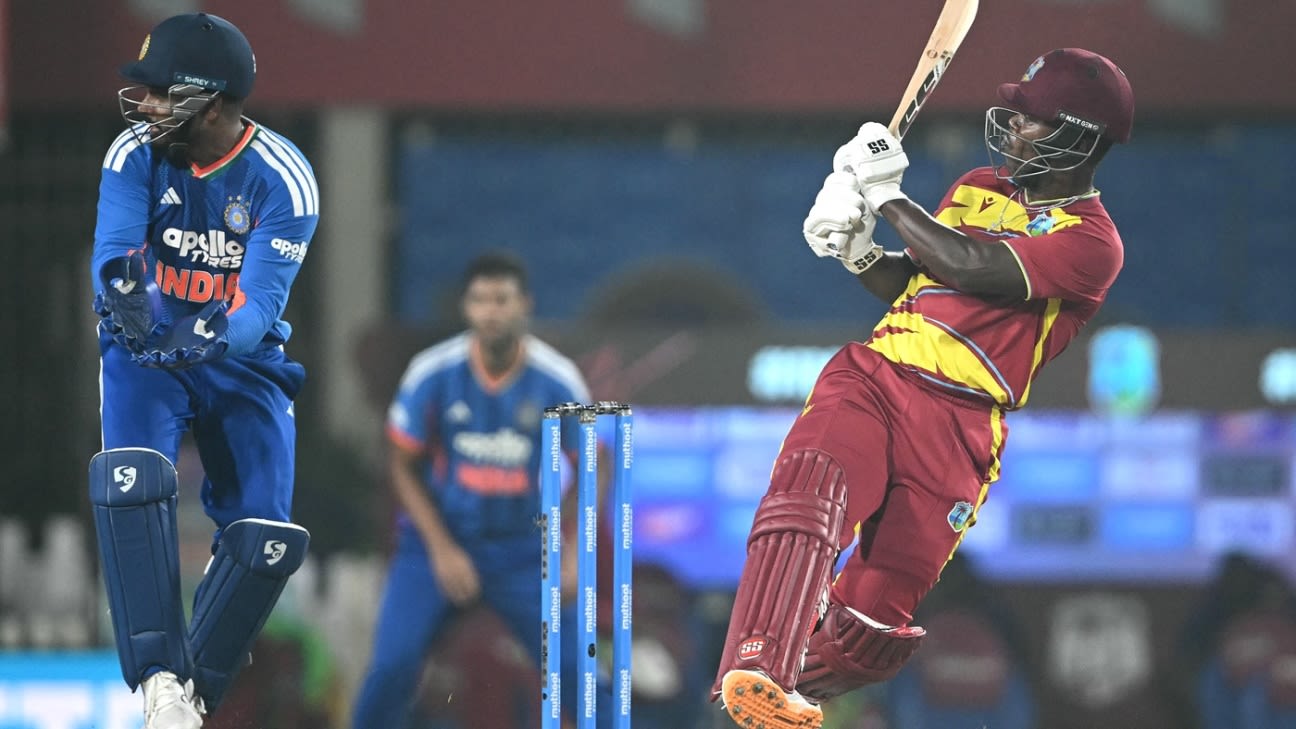
West Indies cricket is widely associated with powerful batting, athletic fielding, and a rich tradition of fast bowling. The team has produced influential players across generations and remains capable of challenging leading international sides when its batting and bowling units perform together. Its approach can vary according to the format, pitch conditions, squad composition, and opposition strategy.
A useful analysis of the West Indies innings considers how effectively the top order handles India’s new-ball attack and whether the middle order maintains momentum. In T20 cricket, boundary hitting and running between the wickets can significantly influence the final total. In ODIs, partnerships and the management of wickets become increasingly important as the innings develops. Test matches demand concentration over longer periods and the ability to withstand sustained bowling pressure.
West Indies’ bowling performance should also be assessed carefully. Early wickets can disrupt India’s batting plans, while accurate spells in the middle overs can limit scoring opportunities. Death-over execution is especially important in limited-overs cricket, where a few expensive deliveries may change the result.
Key Batting Statistics to Examine
Batting figures explain how individual players contributed to the innings. The highest score is an obvious starting point, but it does not tell the complete story. Strike rate, boundaries, balls faced, and the timing of a player’s dismissal can be equally important when evaluating a performance.
For example, a batter scoring 45 runs from 30 balls may provide considerable value in a T20I, while a patient innings of 45 from 100 balls could be more suitable in a Test match situation. In ODIs, the value of an innings depends on the match situation, required run rate, wickets remaining, and pitch conditions.
Important batting statistics include:
- Runs scored: The total contribution made by each batter.
- Balls faced: The number of deliveries encountered.
- Strike rate: The speed at which the batter scores.
- Fours and sixes: The number of boundaries hit.
- Partnerships: Runs added by two batters together.
- Dismissal method: How each batter lost their wicket.
These figures help readers distinguish between a steady innings that stabilises a team and an aggressive innings that changes the momentum of a match.
Bowling Performance and Wicket Analysis
Bowling statistics are essential for understanding how a team restricted its opponent. A bowling scorecard typically records overs, maidens, runs conceded, wickets taken, and economy rate. In limited-overs cricket, the economy rate reveals how effectively a bowler controls scoring, while the wicket column shows their success in dismissing batters.
However, bowling figures should always be considered in context. A bowler taking two wickets while conceding relatively few runs may have delivered an excellent spell, but a bowler who takes important wickets during the final overs may also have made a decisive contribution. Pitch conditions, field placements, and the quality of the opposing batters all affect performance.
When analysing India against West Indies, pay particular attention to new-ball movement, middle-over control, spin bowling, and execution at the end of the innings. The India national cricket team vs West Indies cricket team match scorecard allows fans to identify which bowlers created pressure and which partnerships were eventually broken.
Important Turning Points in the Match
Every cricket match contains moments that can influence its direction. These may include an early breakthrough, a dropped catch, a crucial batting partnership, a successful review, or a strong finish with the bat. A scorecard cannot describe every tactical decision, but it provides evidence that helps readers understand the result.
For example, losing two wickets in the opening overs can force a batting team to reconsider its scoring strategy. A partnership in the middle overs may then rebuild the innings before a late acceleration. Alternatively, a team chasing a target might appear comfortable until a series of wickets increases the pressure.
The most useful turning points to examine are:
- The first major wicket-taking spell.
- The highest-scoring partnership.
- The overs in which the scoring rate changed significantly.
- The contribution of all-rounders under pressure.
- The final overs or decisive sessions.
- The fielding moments that affected the result.
Combining these moments with the numerical scorecard gives readers a more complete account of how the match was won or lost.
Comparison Between India and West Indies
India and West Indies bring different strengths to international cricket, although their actual performances depend on the players selected for a particular match. India has often relied on batting depth, adaptable spin options, and a varied bowling attack. West Indies can offer powerful stroke-makers, aggressive fast bowlers, and players capable of changing a limited-overs game quickly.
| Performance Area | India | West Indies |
|---|---|---|
| Batting approach | Often combines stability with acceleration | Can feature highly aggressive stroke play |
| Bowling options | Pace, spin, and all-round contributions | Pace, variation, and specialist options |
| Key batting factor | Partnerships and innings management | Boundary scoring and momentum |
| Fielding impact | Catching and ground-fielding consistency | Athleticism and pressure-building |
| Main tactical priority | Adapt to conditions and control phases | Exploit opportunities and sustain pressure |
This comparison describes general playing characteristics rather than guaranteed strengths in every fixture. The actual scorecard remains the best starting point for evaluating the teams’ performances in a specific game.
How to Read the Final Match Result
The final result shows whether a team won by runs, wickets, or an innings and runs in Test cricket. In a successful run chase, the winning side usually has wickets remaining when it reaches the target. When the team batting first wins, the margin is often expressed in runs. Test matches may also end in a draw or, in certain circumstances, a tie.
Readers should also check whether weather interruptions or revised targets affected a limited-overs fixture. The number of overs available can change the required scoring rate and influence team strategies. In Test cricket, the match situation after each innings is important because both teams may bat more than once.
For an accurate match report, the final scorecard should be checked against the relevant official match record. This ensures that totals, individual scores, bowling figures, and the result are consistent.
Why Fans Follow Match Scorecards
Scorecards remain valuable for casual viewers, dedicated supporters, analysts, and fantasy cricket participants. They make it possible to revisit a match without watching the entire broadcast and help readers compare individual contributions across different games. They are also useful for tracking player form, examining partnerships, and identifying patterns in a team’s results.
Fans following India and West Indies can use scorecards to understand whether a team’s success came from top-order batting, lower-order recovery, effective bowling, or disciplined fielding. Over time, these records help build a clearer picture of individual players and team development. They are particularly helpful when a headline result does not explain the competitive nature of the match.
Conclusion
The India national cricket team vs West Indies cricket team match scorecard is a useful starting point for understanding the statistics, strategy, and decisive performances behind an international cricket fixture. Batting totals, partnerships, bowling figures, wickets, and the final result all contribute to a complete match analysis. Comparing these details across Test matches, ODIs, and T20Is also reveals how different formats influence team tactics.
For the most accurate analysis, readers should use the scorecard for the specific fixture they want to review. Once the match date, venue, and format are identified, the statistics can be used to explain the leading performances and the moments that shaped the contest. A verified scorecard turns the final result into a detailed account of how India and West Indies competed on the field.

