
The Afghanistan national cricket team vs India national cricket team match scorecard is a popular search for cricket fans who want to understand the performances, statistics, and turning points of an international match between these two teams. India has a long history of success in international cricket, while Afghanistan has developed into a competitive side known for its talented spin bowlers, aggressive batting, and determination. Whenever these teams meet, supporters look for runs scored, wickets taken, partnerships, bowling figures, and the final result.
A cricket scorecard offers much more than the final score. It helps readers understand how each innings progressed, which batters contributed the most, and how bowlers controlled the game. The format also makes it easier to compare team performances across One Day Internationals (ODIs), Twenty20 Internationals (T20Is), and Test matches. Because the result and individual statistics differ from one fixture to another, readers should identify the specific match and format before interpreting the numbers.
This article explains how to read the scorecard, which statistics matter most, and what fans should consider when analysing an Afghanistan versus India contest.
Afghanistan vs India Match Overview
Afghanistan and India bring different strengths to the international cricket arena. India generally benefits from its depth of batting, experience in high-pressure situations, and variety of bowling options. Afghanistan, meanwhile, has built a reputation for producing skilful spin bowlers and batters capable of changing a match through rapid scoring. These contrasting styles can make their contests interesting across different formats.
When reviewing a match, the first details to check are the venue, match date, toss result, innings totals, and winning margin. The pitch and weather conditions can also influence the outcome. A dry surface may help spin bowlers, while a flat pitch can favour batters who rotate the strike and find boundaries consistently.
The Afghanistan national cricket team vs India national cricket team match scorecard should always be connected to the correct fixture. Without a specified date or tournament, there is no single scorecard that represents every meeting between the teams. A reliable analysis must distinguish confirmed match statistics from general observations about the teams.
Latest Afghanistan vs India Match Scorecard
One recent example is the third T20 International played on 17 September 2026 at Arun Jaitley Stadium in Delhi. India scored 221/7 in 20 overs, and Afghanistan were dismissed for 94 in 14.1 overs. India won by 127 runs, completing a 3–0 sweep of the T20I series.
The match demonstrated how quickly a T20 contest can shift when one team combines explosive batting with effective bowling. India’s total created a demanding chase, and Afghanistan struggled to maintain a consistent scoring rate while losing wickets. The result also highlighted the importance of partnerships: a strong individual contribution can give a team momentum, but the remaining batters must build on it to create a competitive total.
The following summary provides the key match details for readers looking for a concrete example of how a scorecard is presented.
| Match detail | Information |
|---|---|
| Match | Afghanistan vs India, 3rd T20I |
| Date | 17 September 2026 |
| Venue | Arun Jaitley Stadium, Delhi |
| India innings | 221/7 in 20 overs |
| Afghanistan innings | 94 all out in 14.1 overs |
| Result | India won by 127 runs |
| Leading Indian batter | Abhishek Sharma, 108 runs |
| Leading Indian bowlers | Nitish Kumar Reddy and Ravi Bishnoi, 3 wickets each |
| Player of the Match | Abhishek Sharma |
Match figures: Indian Express match report and scorecard.
India Batting Performance
India’s batting performance in this T20I was built around a remarkable innings from Abhishek Sharma. He scored 108 runs from just 34 deliveries, hitting nine fours and 11 sixes. His aggressive approach put Afghanistan’s bowlers under immediate pressure and helped India maintain a scoring rate above 11 runs per over. Sanju Samson also contributed with 50 from 35 balls, providing support at the top of the order.
The innings illustrates why a batting scorecard should be studied beyond the total number of runs. The balls faced, boundaries, sixes, and strike rate explain how effectively a player converted an opportunity into a major contribution. Shreyas Iyer added 29 runs, while other batters supplied smaller contributions as India finished with 221/7.
When analysing India’s innings in the Afghanistan national cricket team vs India national cricket team match scorecard, readers should consider both individual milestones and the overall team run rate. A century can dominate the headlines, but partnerships, late-innings scoring, and the ability to maintain pressure across all 20 overs are equally important to understanding why a total becomes difficult to chase.
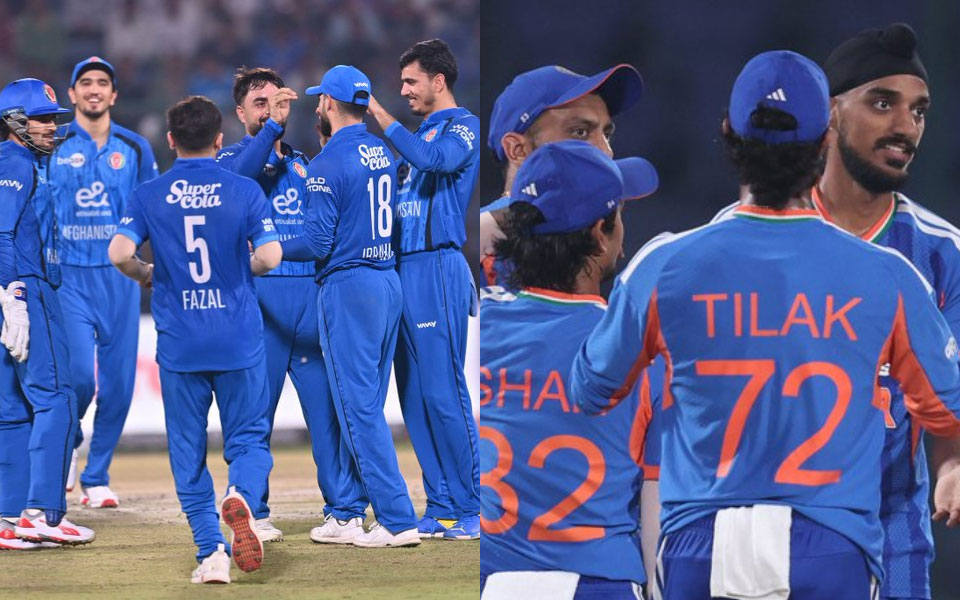
Afghanistan Batting Performance
Afghanistan’s chase ended at 94 all out, leaving the team well short of India’s target of 222. Ibrahim Zadran top-scored for Afghanistan with 25 runs from 16 balls, while Rahmanullah Gurbaz made 15 from 11 deliveries. Azmatullah Omarzai contributed 17, but Afghanistan could not develop a substantial partnership to bring the required run rate under control.
A steep target in T20 cricket requires a balance between attacking shots and protecting wickets. If a chasing team loses several batters early, the remaining players face increasing pressure to score quickly. That pressure can lead to risky shots, fewer opportunities to build partnerships, and a rapid collapse.
Afghanistan’s innings shows how a strong bowling performance can complement a high first-innings total. For readers examining a scorecard, the most useful details include the highest individual score, the number of batters dismissed, the fall of wickets, and the number of overs completed. These figures explain the difference between a competitive chase and an innings that ends well before the allotted overs.
Bowling Analysis and Key Contributions
India’s bowlers made effective use of the substantial total defended by the team. Nitish Kumar Reddy took three wickets for 25 runs, while Ravi Bishnoi also claimed three wickets. Axar Patel added two wickets, helping restrict Afghanistan’s scoring and prevent the middle order from recovering.
Bowling figures should be evaluated using several measurements rather than wickets alone. Overs bowled indicate workload, runs conceded show the cost of each spell, and the economy rate measures how many runs a bowler allows per over. Wickets reveal how effectively a bowler dismisses batters, but the match situation also matters: removing an established batter during a developing partnership can be more influential than taking a wicket after the result is nearly decided.
Afghanistan’s bowling performance can likewise be judged by its ability to restrict boundaries and create pressure during India’s innings. Although India reached a large total, the scorecard gives readers a way to identify which bowlers conceded the most runs and which managed to take important wickets. The balance between containment and wicket-taking is particularly important in T20 matches, where a few overs can determine the final margin.
Important Turning Points in the Match
Several factors explain India’s convincing victory. The first was the partnership between Sanju Samson and Abhishek Sharma, which gave India a strong start. Abhishek’s rapid scoring then transformed the innings into a high-scoring performance. His ability to clear the boundary repeatedly forced Afghanistan to adjust its bowling plans and made it difficult to slow India’s momentum.
The second turning point came during Afghanistan’s chase. Early wickets increased the pressure on the incoming batters, who needed to score at a high rate without losing further wickets. India’s bowlers continued to take wickets, preventing Afghanistan from establishing a meaningful recovery. Once the chase began to fall behind the required rate, the challenge became increasingly difficult.
The final difference was the combination of batting firepower and disciplined bowling. In the Afghanistan national cricket team vs India national cricket team match scorecard, India’s total of 221/7 and Afghanistan’s 94 all out show how performances across both innings contributed to the result.
How to Read a Cricket Match Scorecard
A cricket scorecard contains several statistical categories that help readers understand the match. Knowing what each category means makes it easier to compare players and identify the decisive moments.
| Scorecard statistic | What it tells you |
|---|---|
| Runs | Total runs scored by a batter or team |
| Balls | Number of deliveries faced by a batter |
| Fours and sixes | Boundaries hit during an innings |
| Strike rate | Runs scored per 100 balls faced |
| Overs | Overs delivered by a bowler |
| Economy rate | Average runs conceded per over |
| Wickets | Number of batters dismissed by a bowler |
| Extras | Runs awarded through wides, no-balls, byes, and leg-byes |
| Fall of wickets | The score and stage at which each batter was dismissed |
| Result | The winning team and margin of victory |
The innings total combines runs scored by batters with any extras awarded. A batter’s individual score does not include every extra that contributes to the team total. Similarly, bowling figures should be interpreted alongside the number of overs and runs conceded.
When checking the Afghanistan national cricket team vs India national cricket team match scorecard, readers should also look at the innings order. In limited-overs cricket, the team batting first establishes a target, while the chasing team attempts to reach it within the permitted overs. In Test cricket, the match can extend across several days and include two innings per side, making the scorecard considerably more detailed.
ODI, T20I and Test Match Scorecard Differences
The format has a major influence on how an Afghanistan versus India scorecard should be interpreted. Each format uses different strategies, scoring patterns, and match conditions.
-
T20 Internationals: Each team normally has 20 overs. Strike rate, boundary hitting, powerplay scoring, and death-over bowling are especially important.
-
One Day Internationals: Each team normally has 50 overs. Batters must balance scoring quickly with building longer partnerships, while bowlers manage different phases of the innings.
-
Test matches: Each team can bat twice, subject to match conditions. Batting time, innings totals, bowling spells, follow-on decisions, and the match situation all influence the result.
For example, a strike rate above 150 can be valuable in T20 cricket, whereas a batter’s contribution in a Test match may be measured partly by the time spent at the crease and the ability to preserve wickets. Economy rates also have different contexts depending on the format.
Anyone searching for a particular Afghanistan national cricket team vs India national cricket team match scorecard should therefore confirm whether the match was a T20I, ODI, or Test before comparing performances. This avoids mixing statistics from different fixtures and drawing misleading conclusions.
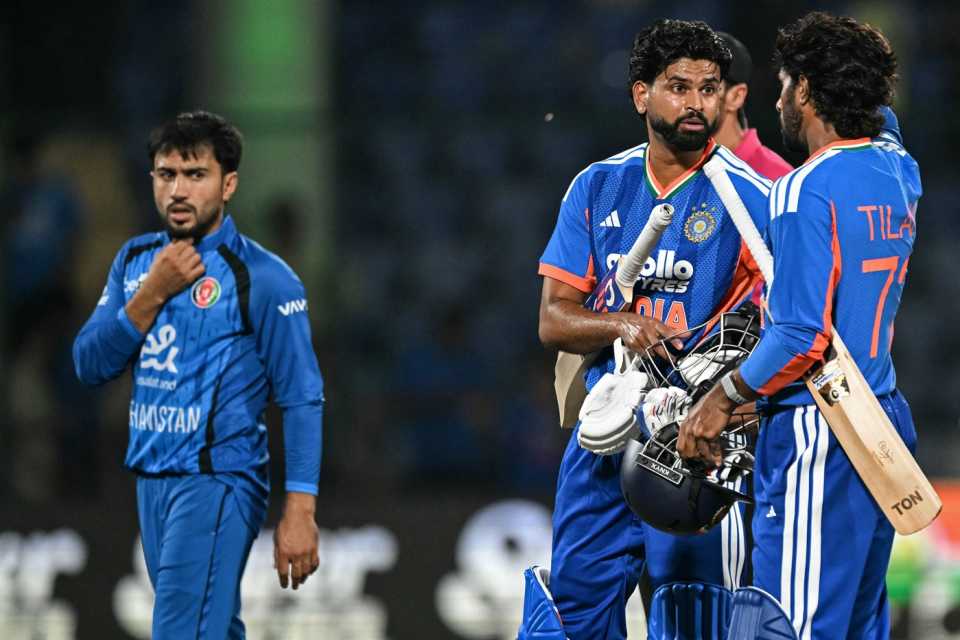
Key Players to Watch in Afghanistan vs India Matches
India and Afghanistan have several players capable of influencing a match through individual skill and tactical awareness. India’s batting depth can create momentum at the top of the order and provide additional scoring options in the middle and lower order. Its bowling resources also offer different approaches, including pace, swing, and spin.
Afghanistan’s strength often comes from its spin attack and its ability to produce aggressive batting performances. Rashid Khan has been a prominent figure in international cricket because of his wicket-taking ability, while batters such as Rahmanullah Gurbaz and Ibrahim Zadran can provide attacking starts. The effectiveness of these players depends on the conditions, opposition, team selection, and current form.
When assessing players, consider these factors:
-
Recent runs scored and batting consistency.
-
Wickets taken and bowling economy.
-
Performance against pace and spin.
-
Partnerships and contributions under pressure.
-
Fielding, catches, and run-outs.
-
Performance in the specific format being played.
Individual reputations can help identify players to follow, but the match scorecard remains the best starting point for understanding what actually happened in a particular game.
What the Match Statistics Tell Cricket Fans
Statistics are most useful when they explain the story behind a result. India’s 221/7 in the September 2026 T20I demonstrated the impact of aggressive batting, while Afghanistan’s 94 all out highlighted the difficulty of chasing a large target after losing wickets. The 127-run margin reflected India’s dominance in both departments.
However, a single match should not be treated as a complete measure of either team’s overall ability. Pitch conditions, the quality of the opposition, team combinations, weather, and the stage of a tournament can all affect performance. A close contest in one format may be followed by a one-sided match in another.
Readers who want a broader comparison should review several recent scorecards and look for recurring patterns. These may include India’s consistency in building large totals, Afghanistan’s ability to take wickets through spin, the performance of opening partnerships, or the effectiveness of each side during the final overs. Comparing multiple fixtures provides a more balanced view than relying on one result.
Conclusion
The Afghanistan national cricket team vs India national cricket team match scorecard helps cricket fans examine batting contributions, bowling figures, partnerships, and the moments that determine an international contest. The September 2026 T20I provides a clear example: India scored 221/7, Afghanistan were dismissed for 94, and India secured a 127-run victory. Abhishek Sharma’s century and the wicket-taking efforts of Nitish Kumar Reddy and Ravi Bishnoi were major features of the match.
For the most meaningful analysis, readers should check the exact match date, format, venue, innings totals, and individual performances before drawing conclusions. Studying these details makes it easier to understand why one team gained the advantage and how players influenced the final result. Whether following T20Is, ODIs, or Test cricket, a carefully interpreted scorecard offers a clear and informative picture of the contest between Afghanistan and India.