
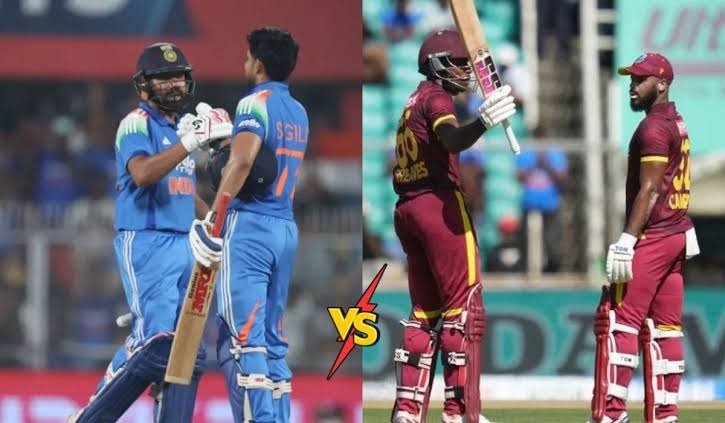
The west indies cricket team vs india national cricket team match scorecard is an important reference for cricket fans who want to understand how a match between these two international sides unfolds. India and the West Indies have a long history of competitive cricket, featuring powerful batting, skilful bowling, memorable partnerships, and exciting finishes across Test matches, One Day Internationals (ODIs), and Twenty20 Internationals (T20Is). Each format presents different challenges, making scorecards valuable for evaluating individual contributions and overall team performance.
A scorecard provides more than the final result. It records runs scored, wickets lost, overs bowled, strike rates, bowling figures, extras, and the fall of wickets. These details help readers identify which batters controlled the innings, which bowlers changed the momentum, and how the winning team established its advantage. Since India and the West Indies have played many matches across formats and tournaments, the exact scorecard depends on the particular fixture. Understanding the match date, venue, and format is therefore essential when examining a specific result.
History of India vs West Indies Cricket
India and the West Indies have shared a rich cricketing rivalry for decades. The West Indies established themselves as a dominant force in international cricket during the second half of the twentieth century, supported by exceptional fast bowlers, technically strong batters, and outstanding fielders. India gradually developed into a major cricketing power, producing generations of players capable of competing successfully in different conditions.
Their contests have featured contrasting styles. Indian teams have often relied on technically accomplished batting, spin options, and increasingly versatile pace attacks. West Indies teams have traditionally been associated with aggressive batting, athletic fielding, and fast bowling, although their approach has evolved across generations. Modern T20 cricket has further strengthened the West Indies’ reputation for explosive hitting, while India have combined aggressive batting with tactical depth.
The rivalry is not limited to one competition. Matches have taken place in bilateral series, World Cups, and other international tournaments. Every encounter creates a different statistical story, which is why fans frequently examine batting cards, bowling figures, partnerships, and match summaries instead of relying only on the final score.
West Indies Innings: A Powerful Batting Display
The West Indies established a strong position by scoring 247 runs for three wickets in 20 overs. Their innings combined attacking stroke play with effective partnerships, allowing the team to maintain a high scoring rate throughout the contest. The batters targeted scoring opportunities against both pace and spin, putting pressure on India’s bowling attack and making it difficult for the fielding side to control the innings.
Shai Hope was the standout batter, scoring an unbeaten 102 from 50 deliveries. His innings included powerful boundary hitting and an ability to rotate the strike when opportunities for big shots were limited. Sherfane Rutherford also contributed significantly, finishing unbeaten on 49 and helping the West Indies accelerate towards the end. Their partnership gave the visitors the platform to set a challenging target.
The West Indies benefited from their ability to convert a promising start into a substantial total. Instead of relying entirely on late hitting, they maintained pressure through successive partnerships. India’s bowlers had to adjust their lengths and field placements repeatedly, but the visitors continued to find scoring opportunities.
Important elements of the West Indies innings included:
-
Shai Hope’s unbeaten century, which anchored the innings.
-
Sherfane Rutherford’s valuable unbeaten contribution.
-
Strong boundary hitting during the middle and final overs.
-
Effective partnerships that kept the scoring rate high.
-
Pressure created through a target of 248 runs.
These performances explain why the West Indies entered the second innings with a significant advantage.
India Innings: The Run Chase
Chasing 248 was always going to require an aggressive approach from India. The home side needed to score quickly while preserving enough wickets to sustain the challenge through the middle overs. However, the West Indies struck important blows that interrupted India’s momentum and prevented the chase from developing into a controlled pursuit.
Sanju Samson scored 56 from just 23 deliveries, giving India a burst of scoring and briefly increasing the possibility of a successful chase. His aggressive batting demonstrated how quickly a high target can become more manageable when a batter finds the boundary consistently. However, his dismissal changed the direction of the innings, as the West Indies began to apply pressure through regular wickets.
Tilak Varma and Nitish Reddy attempted to rebuild the chase with a partnership that kept India’s hopes alive. Reddy scored 41, but the West Indies continued to attack rather than allowing the partnership to settle. Once the middle order began losing wickets, India’s required scoring rate became increasingly difficult to manage.
India eventually finished on 223 for nine in 19.3 overs, falling 24 runs short. The result showed that a strong start is not always enough in T20 cricket. Batters must also build partnerships, manage pressure, and maintain scoring momentum after the initial attacking phase.
Key Player Performances
Individual performances often explain the difference between winning and losing. In this match, the West Indies combined a major batting contribution with a match-changing bowling display. India also had notable performances, particularly from Samson, but could not maintain the same momentum throughout the chase.
| Player | Team | Performance |
|---|---|---|
| Shai Hope | West Indies | 102 not out off 50 balls |
| Sherfane Rutherford | West Indies | 49 not out |
| Sanju Samson | India | 56 off 23 balls |
| Nitish Reddy | India | 41 runs |
| Keemo Paul | West Indies | Five wickets |
Shai Hope’s century was the defining batting performance because it provided both stability and acceleration. Rutherford complemented him by continuing to attack, while Samson’s rapid half-century offered India’s strongest response. Keemo Paul’s five-wicket haul proved crucial during the chase, as his breakthroughs prevented India from building a sustained recovery.
Bowling Analysis and Match Turning Points
Bowling performance is particularly important when a team is defending a total above 240. Even a strong bowling attack can struggle if batters consistently find gaps and clear the boundary. The West Indies needed wickets at key moments rather than simply attempting to restrict every over to a low run total.
Keemo Paul supplied those breakthroughs. His five-wicket performance disrupted India’s batting order and turned a challenging chase into an increasingly difficult one. Removing set batters was especially valuable because established partnerships were India’s best chance of remaining close to the required run rate.
India, meanwhile, struggled to contain the West Indies during the first innings. Conceding 247 runs left little room for error. When defending a large target, bowlers must combine accurate lengths with variations that prevent batters from settling into predictable hitting patterns.
The match highlighted several important tactical lessons:
-
Early wickets can change the direction of a high-scoring chase.
-
Bowling plans must adapt to aggressive batters and changing match conditions.
-
Partnerships are essential when pursuing a demanding target.
-
A large total creates pressure, but disciplined bowling is still necessary to defend it.
-
Fielding standards and control of extras can influence the final margin.

Comparing Performance Across Formats
The west indies cricket team vs india national cricket team match scorecard can look very different depending on whether the match is a Test, ODI, or T20I. Each format rewards different combinations of patience, aggression, endurance, and tactical awareness.
| Match format | Main scoring consideration | Key performance indicator |
|---|---|---|
| Test cricket | Building innings over several days | Batting consistency and bowling endurance |
| ODI cricket | Balancing wickets and run rate over 50 overs | Partnerships and middle-over control |
| T20I cricket | Scoring rapidly in a limited number of overs | Strike rate, boundary hitting, and timely wickets |
In Test cricket, a batter’s ability to remain at the crease for a long period can be as valuable as the number of boundaries scored. Bowlers aim to create sustained pressure through accuracy, movement, spin, and changes in pace.
ODIs require a balance between accumulation and acceleration. Teams must build a foundation during the opening overs, maintain momentum through the middle, and finish strongly. T20Is demand even more rapid decision-making because a short period of poor batting or bowling can determine the result.
Consequently, fans should compare players within the context of the format rather than judging every performance by the same statistical standards.
How to Read a Cricket Match Scorecard
A scorecard presents several statistical categories that explain how a match progressed. Understanding these figures makes it easier to identify the strongest performances and the moments that influenced the result.
Batting statistics
-
Runs: The number of runs scored by a batter.
-
Balls faced: The number of deliveries received.
-
Fours and sixes: Boundaries scored from the batter’s shots.
-
Strike rate: Runs scored per 100 balls faced.
-
Dismissal: The manner in which a batter was out, if applicable.
Bowling statistics
-
Overs: The number of overs bowled.
-
Maidens: Overs in which no runs were conceded, under standard scorekeeping rules.
-
Runs conceded: Runs charged to the bowler.
-
Wickets: Dismissals credited to the bowler.
-
Economy rate: Average runs conceded per over.
The scorecard may also show extras, fall of wickets, partnerships, and the innings total. Extras include wides, no-balls, byes, and leg-byes, depending on the delivery and how the runs are recorded.
Together, these statistics provide a more complete understanding of the contest than the final score alone.
What Makes This Rivalry Exciting?
India and the West Indies bring different cricketing traditions and strengths to the field. Their encounters can feature technically accomplished batting, attacking fast bowling, inventive stroke play, and dramatic changes in momentum. These contrasting qualities make the rivalry interesting for both casual viewers and dedicated cricket followers.
India’s strength has often included batting depth and a variety of bowling options. The West Indies have produced many powerful batters who can change a match through aggressive scoring, particularly in limited-overs cricket. However, the balance of power varies from series to series, depending on player availability, form, conditions, and team selection.
For readers following an individual match, it is worth examining the opening partnership, the middle overs, the performance of the death bowlers, and the final result. These areas often explain why one side prevailed even when both teams produced impressive individual performances.
Conclusion
The west indies cricket team vs india national cricket team match scorecard helps cricket fans examine batting contributions, bowling figures, partnerships, and decisive moments in this international rivalry. The fourth T20I played in Hyderabad on 14 October 2026 provides a clear example: the West Indies scored 247 for three, powered by Shai Hope’s unbeaten century, before restricting India to 223 for nine to win by 24 runs.
A useful scorecard analysis goes beyond identifying the winner. It explains how the first innings developed, which partnerships influenced the contest, how bowlers created breakthroughs, and why the chasing side succeeded or fell short. By considering these details alongside the match format and conditions, readers can gain a deeper understanding of the strategies and performances that define India versus West Indies cricket.