
The javelin throw is one of the most visually impressive events in athletics. A successful attempt combines speed, strength, balance, timing, flexibility, and remarkable technical control. Unlike events that are decided within a fraction of a second, javelin allows athletes to build momentum before releasing the spear-like implement toward the far end of the field. The result is a competition where a single throw can completely change the medal picture.
The javelin world athletics championships has developed into one of the most closely followed field events on the global athletics calendar. Fans watch not only for enormous distances but also for the tactical battle between experienced champions and emerging throwers. Recent championships have shown how unpredictable the event can be, with established stars sometimes finishing outside the medals while athletes arriving with less attention produce career-changing performances.
The Tokyo 2025 World Athletics Championships provided another memorable example. In the men’s final, Trinidad and Tobago’s Keshorn Walcott won with 88.16 metres, while Anderson Peters took silver with 87.38 metres and Curtis Thompson claimed bronze with 86.67 metres. India’s Sachin Yadav finished fourth with a personal best of 86.27 metres, while Neeraj Chopra placed eighth with 84.03 metres.
What Makes the Javelin Throw So Difficult?
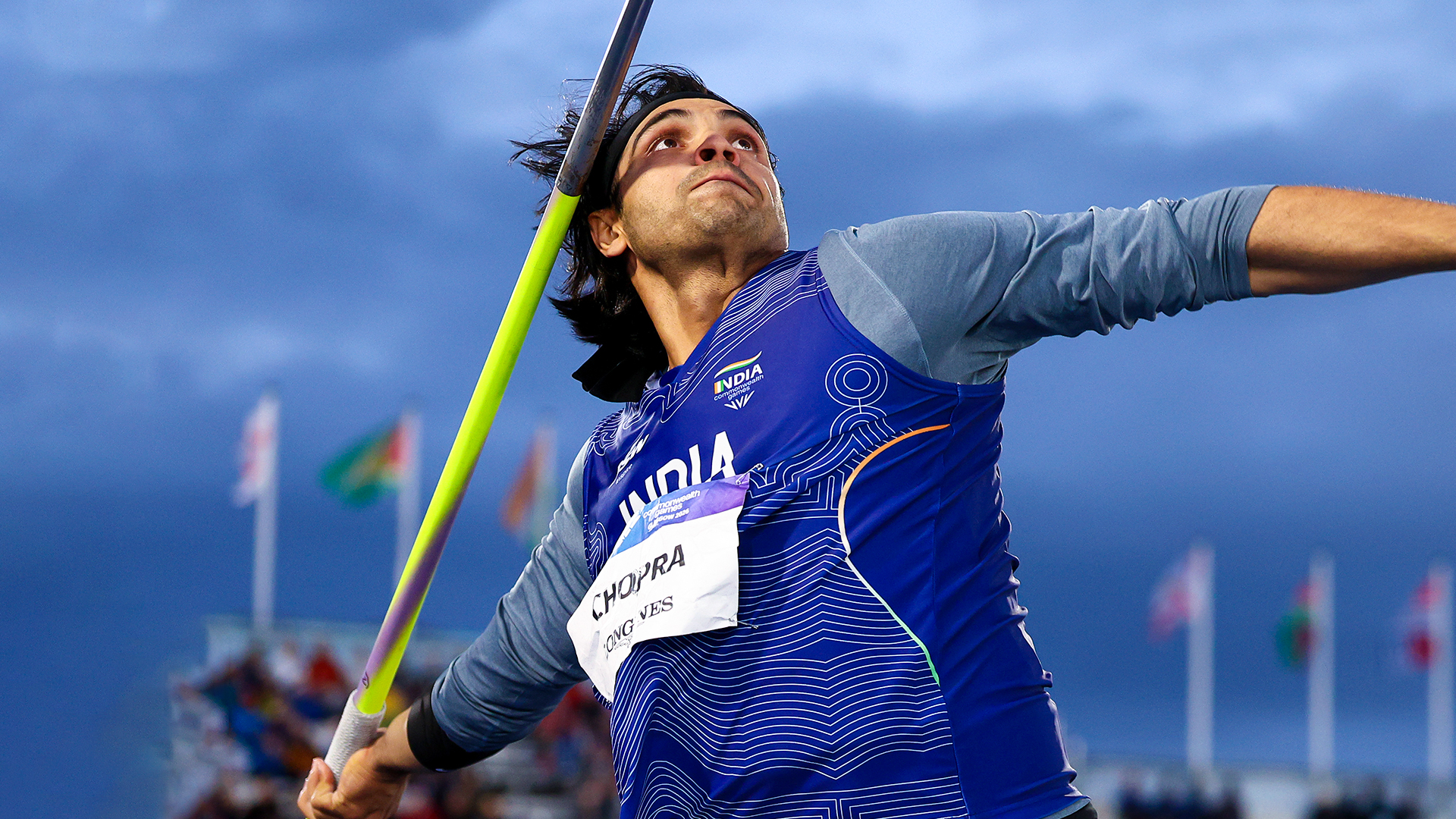
Javelin looks straightforward when viewed from the stands, but elite-level throwing requires an extraordinary combination of physical and technical abilities. Athletes begin with a controlled approach run, gradually increasing speed before entering the crossover phase. During this stage, the thrower positions the body to create separation between the lower and upper body. The final delivery then transfers energy through the legs, hips, torso, shoulder, arm, and hand.
The release itself is only one part of the process. A thrower must control the angle and speed of release while maintaining enough balance to avoid stepping over the foul line. A small technical error can reduce distance significantly. The best competitors therefore spend years developing repeatable movement patterns so that their technique remains reliable under championship pressure.
Wind conditions can also influence performance. A strong tailwind, headwind, or crosswind can change the flight of the javelin and affect how athletes approach their attempts. Because of these variables, competitors cannot simply rely on physical strength. Reading conditions, adapting technique, and selecting the right strategy can be just as important as raw power.
The Evolution of the Javelin World Athletics Championships
The championship history of javelin reflects the broader development of modern athletics. Earlier generations placed considerable emphasis on physical strength, while contemporary training has increasingly focused on biomechanics, speed development, mobility, recovery, and highly specialized technical preparation. Modern athletes are often able to generate enormous throwing velocity without depending solely on muscular size.
The javelin world athletics championships has also become more globally competitive. Athletes from Europe, Asia, Africa, the Americas, and Oceania regularly compete at the highest level. Countries with established throwing traditions continue to produce strong competitors, but newer programs have demonstrated that world-class results can emerge from many different regions.
This international spread has made qualification increasingly meaningful. Reaching a global final is itself a major achievement because athletes must first navigate qualification standards and championship pressure before getting the opportunity to compete for medals. In Tokyo 2025, the men’s automatic qualifying mark was 84.50 metres, with the remaining final places going to the best performers needed to complete the 12-athlete field.
How a Championship Javelin Competition Works
A major championship normally separates the competition into qualification and final stages. During qualification, athletes attempt to reach the automatic qualifying standard. Those who achieve it can secure direct advancement, while additional places are filled by the next-best performers when necessary. This format creates an early test of consistency because competitors cannot afford a series of poor or technically invalid throws.
The final is where the tactical side becomes particularly important. Athletes receive multiple attempts, and their best valid mark determines their final ranking. A competitor may begin conservatively, make an adjustment during the middle rounds, and then produce a decisive throw later in the competition. Others may establish a strong early mark and spend the remaining rounds trying to defend their position.
| Championship stage | Main objective | What matters most |
|---|---|---|
| Qualification | Reach the final | Consistency and qualifying distance |
| Final | Produce the longest valid throw | Technique, power and tactical execution |
| Final rounds | Improve or protect position | Pressure management and adjustments |
| Medal battle | Finish among the top three | Peak performance at the right moment |
The Men’s Event and Its Global Stars
Men’s javelin has developed a particularly strong international following because of the exceptional distances regularly produced by elite competitors. Throwers such as Neeraj Chopra, Anderson Peters, Julian Weber, Arshad Nadeem, Jakub Vadlejch, Julius Yego, and Keshorn Walcott have helped create a highly competitive international field.
Tokyo 2025 demonstrated the depth of the men’s event. Walcott produced an 88.16-metre season-best throw to take the title, while Peters reached 87.38 metres. Thompson’s 86.67 metres secured third place, and Sachin Yadav’s 86.27-metre personal best put him fourth. Chopra, who entered the competition among the leading names in the field, finished eighth with 84.03 metres.
That result was particularly significant because it illustrated how little room there is for error at a global championship. Athletes can arrive with impressive personal records and strong season performances, yet the medal positions are decided by what happens on the competition day. A difference of only a few metres can separate the podium from the lower positions in an elite final.
The Rise of New Javelin Talent
One of the most exciting aspects of the event is the emergence of younger competitors. Javelin athletes can develop over many years because technical efficiency and physical maturity are closely connected. As young throwers gain experience, they often learn how to generate greater speed while improving control during the approach and release.
The Tokyo men’s final offered an example through Sachin Yadav, whose 86.27-metre personal best earned fourth place. His performance showed how quickly the competitive landscape can change when an athlete combines improved physical preparation with technical confidence.
For fans, this development creates an interesting storyline for future championships. Established stars remain important, but emerging throwers can challenge the existing hierarchy with one outstanding series. In javelin, a breakthrough does not necessarily require years of podium finishes. Sometimes one technically perfect championship throw is enough to introduce a new name to the international audience.
Women’s Javelin Is Becoming Increasingly Competitive
Women’s javelin has also produced a fascinating international field, with athletes combining speed, athleticism, technique, and considerable throwing power. The event has benefited from increased global participation and a growing number of competitors capable of producing championship-level marks.
At Tokyo 2025, Ecuador’s Juleisy Angulo won the women’s title with 65.12 metres. Latvia’s Anete Sietina finished second with 64.64 metres, while Australia’s Mackenzie Little took bronze with 63.58 metres. Jo-Ane du Plessis of South Africa and Greece’s Elina Tzengko completed the top five.
The result highlighted another important characteristic of major championships: rankings based on season form do not automatically determine medal positions. The athlete who manages the competition most effectively on the day can outperform competitors with stronger previous marks. That unpredictability makes women’s javelin particularly compelling for spectators who enjoy tactical and technical contests.
Technique Matters More Than Simply Throwing Hard
A common misconception is that the longest javelin throw comes from the strongest athlete. In reality, strength is only one component of performance. The athlete must convert the speed of the approach into a coordinated throwing motion without losing balance or control.
The approach run creates horizontal momentum, while the blocking action helps transfer energy upward and forward. The hips and torso rotate before the throwing arm accelerates through the final movement. When all these elements connect smoothly, the javelin leaves the hand with exceptional velocity and an efficient flight path.
Training therefore includes far more than repeated full-power throws. Athletes work on sprinting, mobility, strength, coordination, core stability, shoulder health, and technical drills. Coaches may break the movement into individual phases before combining everything into a complete throw. This detailed preparation is one reason elite javelin can appear effortless even though the underlying movement is extremely complex.
What Determines a Long Javelin Throw?
Several factors combine to determine the final distance. The speed generated during the approach is important, but that speed must be controlled. Release velocity is another major factor, as is the direction and angle at which the javelin leaves the hand. Aerodynamics then influence how effectively the implement travels through the air.
The athlete’s physical condition on competition day also matters. Fatigue can affect coordination, while excessive nervousness may cause a competitor to rush the approach or lose rhythm. Experienced throwers learn how to control their preparation so that they can reproduce their best mechanics even when thousands of spectators are watching.
The strongest performances usually come from efficiency rather than one isolated movement. When the run-up, crossover, blocking action, rotation, arm acceleration, and release work together, the athlete can maximize the energy transferred into the javelin.
Championship Pressure Can Change Everything
Major championships are different from ordinary competitions because athletes carry enormous expectations. A thrower may have produced outstanding distances throughout a season but still face a completely different challenge when competing for a world medal. Qualification pressure, television attention, crowd noise, weather conditions, and the knowledge that every attempt matters can all influence performance.
This is where experience becomes valuable. Elite competitors develop routines that help them focus on the technical process rather than the final distance. Instead of thinking about winning a medal on every attempt, they may concentrate on approach rhythm, body position, blocking, and a clean release.
At the javelin world athletics championships, these small decisions can determine the outcome. A thrower who stays composed after an early foul may recover with a major mark, while another athlete can lose valuable opportunities by allowing frustration to affect subsequent attempts.
Key Elements Fans Should Watch During a Final
For viewers who are new to javelin, following the distance alone does not reveal the whole story. Watching the athlete’s movement can make the competition much more interesting. Look for the rhythm of the approach, the transition into the crossover steps, and the moment when the athlete creates a strong blocking position before release.
A few details are particularly useful to notice:
- Approach speed and rhythm before the throwing phase.
- Body position during the crossover and preparation.
- The blocking action immediately before release.
- Release speed, direction, and balance after the throw.
Once spectators understand these elements, a javelin final becomes easier to appreciate. A throw that travels slightly shorter than another may still demonstrate excellent technique, while a very long throw can sometimes involve a technical risk that may not be repeatable.
Why the Event Remains So Popular
Javelin has a rare combination of simplicity and complexity. The basic objective is easy to understand: throw the javelin farther than the competition. Yet the mechanics behind a world-class attempt are sophisticated enough to keep coaches, athletes, and technical analysts studying the event for years.
The dramatic nature of the competition also helps its popularity. A single late-round throw can completely change the medal standings. Unlike sports where a large lead can sometimes be protected for a long period, field events give athletes repeated opportunities to produce a decisive performance.
The international nature of the competition adds another layer. Athletes represent different countries, training systems, and sporting traditions, yet they meet under the same rules and are judged by the same measurement. That creates a direct and easily understood comparison between the world’s best throwers.
Looking Ahead to Future Championships
The next generation of javelin competition is likely to be shaped by a combination of established champions and ambitious emerging athletes. Improvements in sports science, strength conditioning, biomechanics, recovery methods, and injury prevention continue to influence elite preparation. At the same time, the fundamentals of the event remain unchanged: athletes still need speed, coordination, precision, and the ability to perform under pressure.
The men’s results from Tokyo 2025 showed how competitive the field can become. Eight finalists reached at least 84 metres, while the winning mark was 88.16 metres. The narrow margins among several leading athletes suggest that future championship battles could again be decided by individual attempts rather than large differences in ability.
Women’s javelin is following a similarly competitive path. Tokyo produced a tightly contested final, with the gold medal separated from the silver by less than half a metre. Such margins demonstrate why championship preparation and execution are so important.
Conclusion
The javelin world athletics championships represents much more than a contest to see who can throw the farthest. It is a test of speed, strength, technique, precision, discipline, tactical awareness, and mental control. Every successful attempt is the product of years of training and thousands of repetitions designed to make a complex movement look natural. The latest championship results demonstrate how unpredictable elite javelin can be. Keshorn Walcott captured the men’s title in Tokyo with 88.16 metres, while Sachin Yadav’s personal best and fourth-place finish underlined the arrival of another serious competitor. In the women’s competition, Juleisy Angulo secured the title in a closely fought final.

