
The javelin throw has become one of the most closely followed field events in international athletics. It combines explosive strength, speed, coordination, balance, technique, and remarkable control, with elite athletes capable of sending the spear-like implement more than 80 or 90 metres. At the global level, the event is particularly compelling because a competition can change dramatically with a single throw. An athlete who is outside the medal positions after several rounds can suddenly produce a major performance and move into contention.
The javelin world athletics championships represent one of the biggest stages for athletes who spend years refining every part of their technique. Unlike events decided by a finish-line clock, javelin rewards distance, but distance itself depends on a complex combination of approach speed, release position, throwing angle, body rotation, strength, and timing. Small technical improvements can make a meaningful difference, while a minor mistake can turn a potentially huge throw into a foul or a disappointing result.
Recent championships have also demonstrated how unpredictable the event can be. Tokyo 2025 produced a men’s podium that was very different from many pre-event expectations, while the women’s competition delivered a national-record performance at the top. These results show why championship competition cannot always be predicted from rankings or previous reputation.
What Makes the Javelin World Athletics Championships Special?
The javelin world athletics championships bring together athletes from different continents who qualify through international standards and rankings. The competition normally begins with a qualification stage, where athletes attempt to reach the automatic qualifying distance or advance based on the overall qualification results. The strongest competitors then move into the final, where the medal positions are decided over a series of throws.
The format creates an interesting strategic challenge. Athletes do not simply need to throw as far as possible on every attempt. They must also manage their rhythm, avoid fouls, respond to changing conditions, and make technical adjustments between rounds. A safe opening throw can provide a measured result, allowing an athlete to take greater risks later. On the other hand, a powerful early throw can put pressure on the rest of the field.
Championship conditions can also influence performances. Wind direction, temperature, runway conditions, and an athlete’s ability to control nerves all matter. A javelin thrower may have produced an outstanding mark earlier in the season but struggle to reproduce it when competing for a world medal. This is one reason championship results often create unexpected stories.
Tokyo 2025: A Memorable Men’s Javelin Final
The latest completed World Athletics Championships were held in Tokyo in September 2025, and the men’s javelin final produced one of the most surprising results of the championship. Trinidad and Tobago’s Keshorn Walcott won the gold medal with a season’s best throw of 88.16 metres. Anderson Peters of Grenada took silver with 87.38 metres, while American Curtis Thompson won bronze with 86.67 metres.
Walcott’s victory was especially significant because he had already established himself as a major international athlete earlier in his career. His Tokyo performance added a World Championships title to an impressive résumé and demonstrated the value of experience at the highest level. He moved into the lead with an 87.83-metre throw before improving to 88.16 metres later in the competition.
India’s Sachin Yadav was another major story from the final. He finished fourth with a personal best of 86.27 metres, narrowly missing the podium. Germany’s Julian Weber, who entered the championships as one of the leading performers of the season, finished fifth with 86.11 metres. Neeraj Chopra placed eighth with 84.03 metres, while Pakistan’s Arshad Nadeem finished tenth with 82.75 metres.
The result showed just how unpredictable championship athletics can be. Athletes who had received considerable attention before the competition did not necessarily occupy the medal positions, while Walcott and Thompson delivered performances that put them on the podium.
Tokyo 2025 Women’s Javelin Competition
The women’s javelin final in Tokyo produced another important moment. Ecuador’s Juleisy Angulo won the world title with a national-record throw of 65.12 metres. Latvia’s Anete Sietina finished second with a personal best of 64.64 metres, while Australia’s Mackenzie Little earned bronze with 63.58 metres.
Angulo’s performance was particularly impressive because she combined championship pressure with a record-breaking national achievement. Her winning distance gave Ecuador a major moment on the global athletics stage and demonstrated the growing competitiveness of women’s javelin.
The women’s field also included several established international competitors. Jo-Ane du Plessis of South Africa finished fourth with 63.06 metres, while Greece’s Elina Tzengko and Colombia’s Flor Denis Ruiz Hurtado also produced throws above 62 metres. The closely packed results highlighted how small differences in execution can separate a medal from a fourth- or fifth-place finish.
Key Tokyo 2025 Javelin Results
The final standings provide a useful snapshot of how competitive the event was in Tokyo. The following table highlights the leading performances from both men’s and women’s finals.
| Event | Gold | Winning Mark | Silver | Bronze |
|---|---|---|---|---|
| Men’s Javelin | Keshorn Walcott | 88.16 m | Anderson Peters | Curtis Thompson |
| Women’s Javelin | Juleisy Angulo | 65.12 m | Anete Sietina | Mackenzie Little |
These results also illustrate the difference between men’s and women’s javelin competitions. The implements used in the two events have different specifications, so the distances should not be compared directly as though they represented identical performances. Each event has its own technical standards, competitive history, records, and performance benchmarks.
How Javelin Throwing Actually Works
At an elite level, javelin throwing is far more complicated than simply running and throwing an object. The athlete begins with a controlled approach before transitioning into the throwing phase. During the final steps, the thrower creates separation between the lower and upper body, positions the throwing arm correctly, and prepares to transfer energy into the javelin.
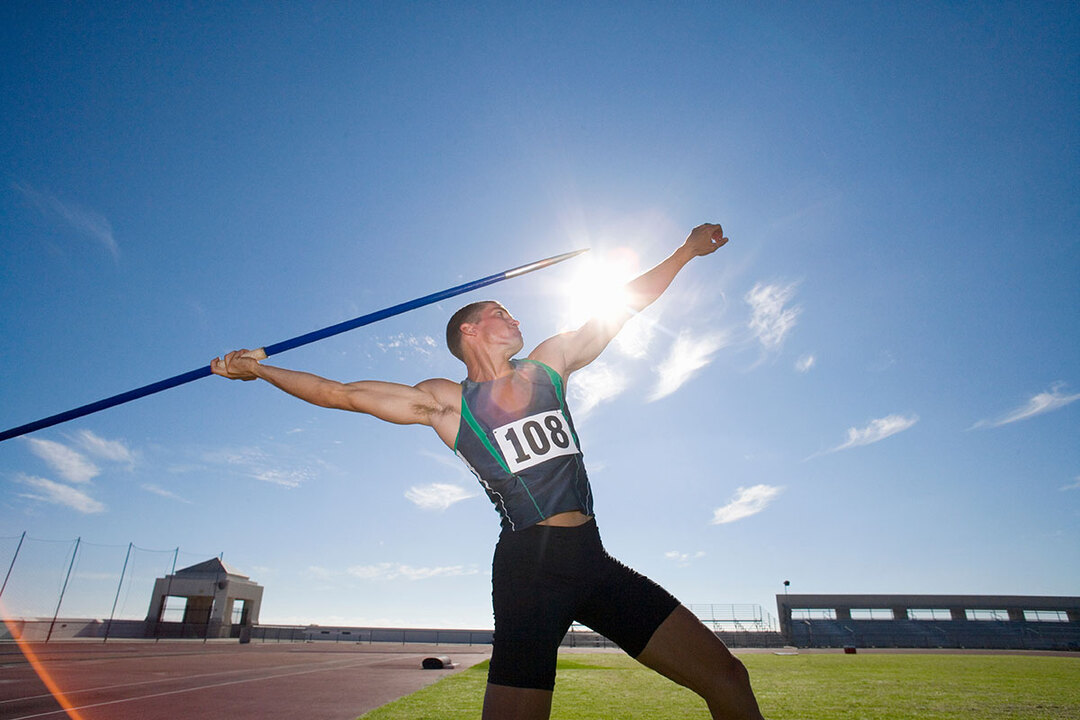
The final delivery is extremely fast. The athlete must maintain balance while generating force through the legs, hips, torso, shoulder, and arm. The release position must also be carefully controlled. Too much emphasis on raw strength without proper timing can reduce distance, while excellent technique can allow an athlete to convert speed and power into a more efficient throw.
The javelin’s flight is also affected by aerodynamics. The angle and orientation of the implement at release influence how efficiently it travels through the air. Elite coaches therefore spend significant time studying video footage, approach speed, release mechanics, body positioning, and landing patterns.
Why Speed and Technique Matter More Than Raw Strength
A common misconception is that the strongest athlete should automatically throw the javelin the farthest. In reality, strength is only one part of the performance equation. An athlete needs explosive power, but that power has to be transferred through a technically efficient movement.
Approach speed is particularly important because the athlete uses the runway to build momentum before the delivery. However, excessive speed can create problems if the thrower cannot control the transition into the final throwing position. The best athletes therefore develop a balance between acceleration and control.
Technique also becomes increasingly important as athletes reach elite levels. A small improvement in release speed, body position, or timing can add valuable metres. This is why professional javelin training often combines sprint work, strength training, mobility exercises, throwing drills, and detailed technical analysis rather than focusing on weightlifting alone.
Athletes Who Shape the Modern Javelin Era
The modern javelin landscape contains athletes from many different countries, making the event one of the most internationally diverse field competitions. Names such as Keshorn Walcott, Anderson Peters, Neeraj Chopra, Arshad Nadeem, Julian Weber, Julius Yego, and other established throwers have helped maintain worldwide interest.
Neeraj Chopra has been particularly influential in increasing attention toward javelin in India. His Olympic and World Championships achievements have helped bring the event to a much larger audience, while his rivalry with other leading throwers has contributed to the growing popularity of international javelin competitions.
Arshad Nadeem has also become an important figure in the event, particularly after his Olympic success and strong performances against the world’s leading throwers. Their appearances at major championships have helped create an international rivalry that attracts attention well beyond traditional athletics audiences.
However, Tokyo 2025 demonstrated why established names cannot be considered guaranteed medalists. Walcott’s victory, Peters’ silver, Thompson’s bronze, and Sachin Yadav’s fourth-place finish showed that championship competition can produce a new order on any given day.
Records and the Pursuit of Greater Distances
Records are an important part of the javelin world athletics championships because the event has a long history of extraordinary performances. The men’s world record stands at 98.48 metres, achieved by Czech thrower Jan Zelezny in 1996. The championships record is 92.80 metres, also belonging to Zelezny, from the 2001 World Championships.
These marks provide a demanding benchmark for today’s generation. Modern athletes regularly compete at distances above 85 metres, while the very best performers can approach or exceed 90 metres. The gap between a strong international performance and a historic record, however, remains significant.
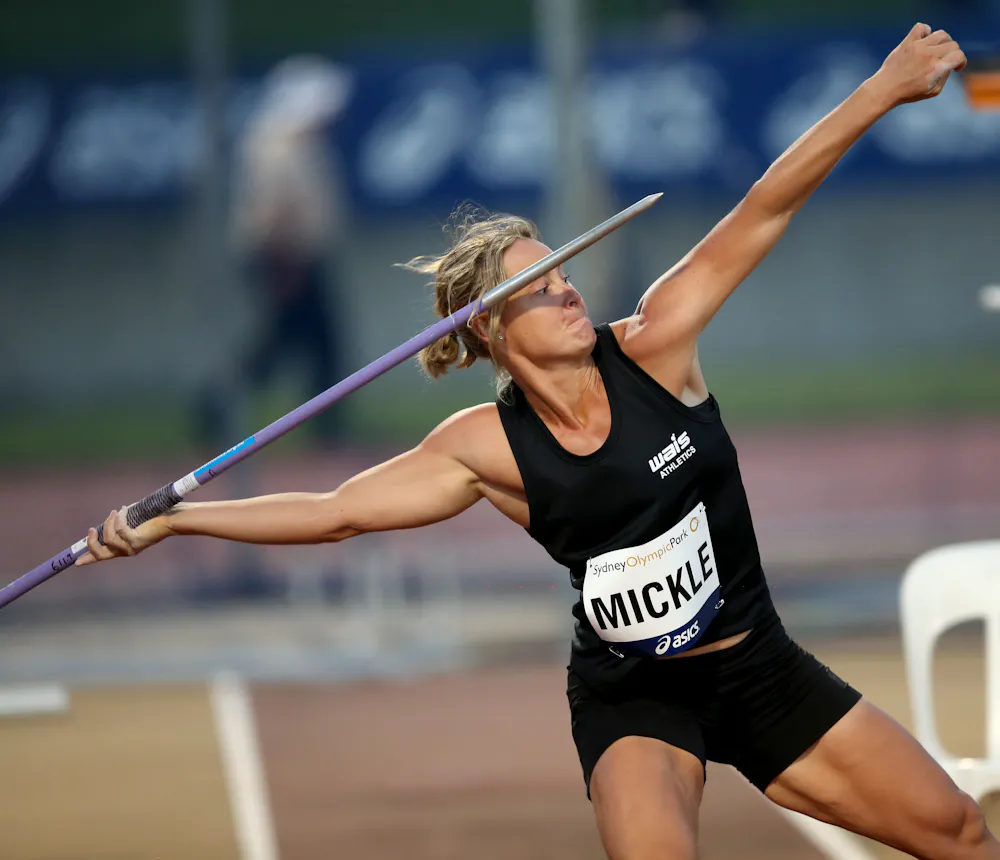
Records are difficult to break because an athlete needs almost everything to come together simultaneously. The approach must be fast and controlled, the transition must be clean, the release must be powerful, and the javelin must maintain an efficient flight. Weather and competition conditions can add another layer of difficulty.
What the 2026 Season Says About the Event
The competitive picture continued to develop after Tokyo. The latest World Athletics championship reporting lists Sri Lanka’s Rumesh Tharanga Pathirage with a 2026 season-best mark of 92.62 metres, followed by Julian Weber at 90.40 metres, Neeraj Chopra at 88.05 metres, Rohit Yadav at 87.68 metres, and Curtis Thompson at 87.59 metres.
These performances demonstrate that the men’s event remains highly competitive. A throw above 90 metres is always significant, and the presence of multiple athletes capable of producing very long throws makes the future of the discipline particularly interesting.
The changing rankings also reinforce an important lesson from Tokyo: season-leading performances do not automatically translate into championship medals. Major competitions introduce additional pressure, and athletes must reproduce their best technique when the stakes are highest.
What Fans Should Watch in Future Championships
Future javelin competitions will likely continue to feature a mixture of established champions and emerging throwers. Fans should pay attention not only to the biggest names but also to athletes whose season results show rapid improvement. A thrower who progresses from the low 80-metre range toward the upper 80s can quickly become a serious international contender.
Several factors can help identify athletes capable of challenging for medals:
- Consistent performances rather than one isolated long throw.
- Strong qualification results at major international meetings.
- Technical consistency under competition pressure.
- The ability to remain competitive across all six final attempts.
Another important aspect will be the development of younger athletes. As training methods, sports science, video analysis, recovery strategies, and equipment knowledge continue to evolve, the next generation may approach distances that currently seem exceptional.
The Growing Global Appeal of Javelin
Javelin has a special advantage as a spectator event because the result is visually understandable. Even someone who does not follow athletics closely can appreciate the difference between a short throw and a massive throw that travels deep into the landing area. The drama increases when several athletes are separated by only a few centimetres.
Social media and digital sports coverage have also changed how fans experience field events. A single long throw can quickly become a highlight, allowing athletes from countries with smaller athletics audiences to gain international recognition. This wider exposure can encourage younger athletes to try the event and help strengthen national development programs.
The international spread of elite javelin is particularly noticeable through the range of countries represented in major finals. From the Caribbean and Europe to Asia, Africa, Oceania, and the Americas, athletes from many regions are capable of reaching the highest level.
Conclusion
The javelin world athletics championships continue to demonstrate why field events deserve the same attention as the biggest track races. The discipline combines power, speed, precision, strategy, and mental strength, creating competitions in which a single throw can transform the entire medal picture. Tokyo 2025 provided a perfect example, with Keshorn Walcott winning the men’s title, Juleisy Angulo taking the women’s crown, and several highly regarded athletes finishing outside the podium. The event is also entering an exciting period. Established stars remain capable of producing major performances, while emerging athletes are closing the gap with impressive distances. The 2026 season has already shown that throws above 90 metres remain within reach for the world’s leading competitors.

