
The javelin throw has become one of the most closely followed field events in international athletics. Combining speed, explosive strength, precision, timing and technical control, the event can change dramatically with a single throw. At the World Athletics Championships, elite javelin competitors face enormous pressure because every attempt can influence the final standings. The event also attracts attention because of its long history, impressive distances and the growing number of countries producing world-class throwers.
The latest major edition was the 2025 World Athletics Championships in Tokyo, Japan, held from September 13 to 21. The men’s javelin final took place on September 18, while the women’s final was held on September 20. Both competitions demonstrated how unpredictable elite javelin can be, with established names and emerging athletes competing under championship pressure.
The javelin world athletics championships are particularly interesting because success is not determined simply by an athlete’s personal best. Championship conditions, qualification performance, runway rhythm, wind, tactical decisions and the ability to deliver a legal throw when pressure is highest can all influence the outcome. This makes javelin one of the most technically demanding events on the athletics programme.
Understanding the Javelin Event at the World Championships
Javelin is a throwing event in which athletes carry the spear-like implement along a runway before generating speed and releasing it into the landing sector. The objective is straightforward: achieve the longest valid throw. However, the technique behind a world-class performance is considerably more complicated. Athletes must build controlled speed during the approach and then transfer that momentum through the hips, torso, shoulder and throwing arm while maintaining balance and release accuracy.
At the World Athletics Championships, competitors normally progress through qualification before the final. The qualification stage reduces the field to the athletes who meet the automatic qualifying requirement or rank sufficiently high among those who do not reach that mark. In Tokyo, the women’s qualification standard was 62.50 metres, while the final featured 12 athletes.
The championship environment adds another dimension. Athletes cannot simply reproduce their best training throw on demand. They need to manage nerves, competition timing, warm-up routines and the possibility that their first attempt may not go as planned. A strong opening throw can provide security, while a series of fouls can create enormous pressure later in the competition.
The 2025 Tokyo Championships and Men’s Javelin
The men’s javelin final at the 2025 World Athletics Championships produced a result that demonstrated the depth of international competition. Trinidad and Tobago’s Keshorn Walcott won the gold medal with a throw of 88.16 metres. Grenada’s Anderson Peters finished second with 87.38 metres, while the United States’ Curtis Thompson took third with 86.67 metres.
India’s Sachin Yadav produced one of the notable performances of the final, recording 86.27 metres for fourth place and a personal best. Julian Weber of Germany finished fifth with 86.11 metres, while Kenya’s Julius Yego placed sixth at 85.54 metres. Sri Lanka’s Rumesh Tharanga Pathirage also reached the final and finished seventh with 84.38 metres.
The result was especially notable because several high-profile athletes entered the competition with much bigger personal or season-best marks. Neeraj Chopra, Arshad Nadeem, Anderson Peters and Julian Weber were among the prominent names in the starting field, showing the exceptionally high level of competition surrounding men’s javelin. The official starting list recorded Chopra’s personal and season best at 90.23 metres, Nadeem’s personal best at 92.97 metres, Peters’ personal best at 93.07 metres and Weber’s at 91.51 metres.
This difference between an athlete’s established best distance and their championship result is an important part of understanding elite javelin. A thrower may possess the physical ability to reach extraordinary distances but still finish outside the medals if the timing, release or competition execution does not come together on the day.
Women’s Javelin Produces a Historic Tokyo Final
The women’s competition in Tokyo delivered an equally compelling story. Ecuador’s Juleisy Angulo won the gold medal with a national-record throw of 65.12 metres. Latvia’s Anete Sietiņa earned silver with a personal best of 64.64 metres, while Australia’s Mackenzie Little took bronze with 63.58 metres.
Angulo’s winning performance was particularly significant because she did not simply win through consistency; her 65.12-metre effort established a new Ecuadorian national record. Sietiņa’s silver-medal performance was also a personal best, illustrating how championship finals can become the stage where athletes produce the best performances of their careers.
Jo-Ane du Plessis of South Africa finished fourth with 63.06 metres, while Greece’s Elina Tzengko was fifth at 62.72 metres. Colombia’s Flor Denis Ruiz Hurtado placed sixth with 62.32 metres. The final therefore included a broad international representation, with athletes from Europe, Africa, Asia-Pacific and the Americas competing together for global medals.
The women’s result also highlights how rapidly the competitive picture can change. Athletes who arrive with strong season performances still need to execute technically under championship conditions. At the same time, competitors who enter with less attention can produce a breakthrough performance when their approach, release and timing align perfectly.
Key Tokyo Javelin Results at a Glance
The following table summarizes the medal positions from the two senior javelin finals at the 2025 World Athletics Championships.
| Event | Gold | Silver | Bronze | Winning Mark |
|---|---|---|---|---|
| Men’s Javelin | Keshorn Walcott | Anderson Peters | Curtis Thompson | 88.16m |
| Women’s Javelin | Juleisy Angulo | Anete Sietiņa | Mackenzie Little | 65.12m |
The contrast between the winning distances in the men’s and women’s events is not simply a reflection of athlete ability. Men’s and women’s javelins have different specifications, so their performances are measured within separate competitive frameworks. The results nevertheless demonstrate the exceptional technical standards required to win a global championship.
Why Javelin Technique Matters So Much
Javelin success starts well before the athlete reaches the throwing line. The approach run establishes the speed that can eventually be transferred into the implement. Elite throwers carefully control their stride pattern so that they arrive at the final throwing phase in a strong and balanced position.
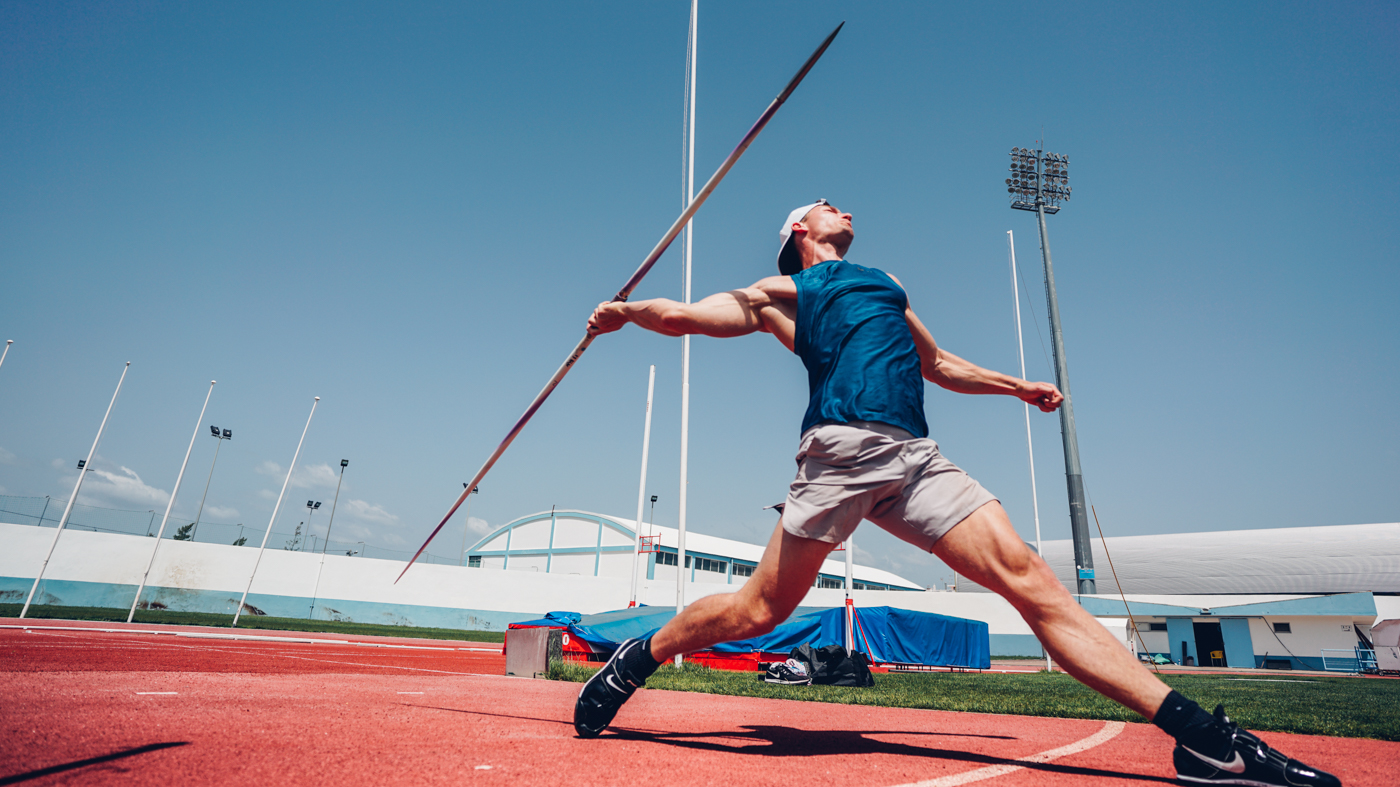
The transition into the delivery phase is particularly important. During the final steps, the athlete moves from an accelerated approach into a throwing position while keeping the javelin aligned correctly. The body then rotates and transfers energy toward the throwing arm. Small technical errors can significantly reduce distance because energy may be lost before reaching the javelin.
Release angle and release speed also play major roles. A throw that leaves the hand with excellent speed but poor trajectory may not travel as far as expected. Similarly, an athlete may generate tremendous body power but lose distance through an unstable release. This explains why elite javelin training combines strength and speed work with extensive technical practice.
What Makes Championship Javelin Different?
Championship competition creates conditions that differ from ordinary meetings. In a regular competition, athletes may have several opportunities to establish a strong mark without the same level of global attention. At a World Championships final, however, every attempt is watched closely, and athletes know that a small mistake can have major consequences.
Several factors can influence a championship javelin performance:
- Approach speed and consistency.
- Wind and weather conditions.
- Release angle and throwing speed.
- Ability to remain inside the legal throwing area.
- Mental control during limited competition attempts.
Another important factor is tactical awareness. Athletes have to understand what distance is likely to keep them competitive while also avoiding unnecessary technical risk. A thrower who chases maximum power on every attempt may increase the possibility of a foul or poorly controlled delivery. Successful competitors generally balance aggression with technical discipline.
The Importance of International Rivalries
Modern javelin has developed into a genuinely global event. Europe has traditionally produced many leading throwers, but athletes from Asia, Africa, the Americas and Oceania have increasingly become important contenders. This geographic expansion has helped create rivalries that attract audiences beyond traditional athletics fans.
India’s Neeraj Chopra has played an important role in increasing attention around men’s javelin in South Asia. Pakistan’s Arshad Nadeem has also become a major international figure, while athletes such as Anderson Peters, Julian Weber and Keshorn Walcott represent different parts of the global competitive landscape. Their presence means major championships can contain several athletes capable of producing throws around or above the 85-to-90-metre range.
The Tokyo starting field demonstrated this depth. Walcott, Peters, Chopra, Nadeem, Weber and Yego all arrived with significant international experience or high-level personal marks, while younger or less established competitors had an opportunity to challenge them.
Records That Define Javelin History
Javelin has produced some of the most remarkable distances in athletics history. The men’s world record stands at 98.48 metres, set by Jan Železný of the Czech Republic in 1996. The women’s world record is 72.28 metres, achieved by Barbora Špotáková of the Czech Republic in 2008. The women’s World Championships record is 71.70 metres, set by Cuba’s Olisdeilys Menéndez in 2005.
Championship records are particularly interesting because they represent performances achieved specifically at the World Athletics Championships. They are different from world records, which can be set at eligible competitions around the world. This distinction matters because championship conditions can vary considerably from one edition to another.
The gap between current championship records and recent winning marks also shows how difficult it is to reproduce historic performances. A record requires an extraordinary combination of physical preparation, technique, timing, environmental conditions and competitive execution. That is why major athletics records can remain untouched for many years.
How Athletes Prepare for Elite Javelin Competition
Preparing for a World Championships javelin final requires more than simply increasing throwing strength. Athletes normally develop a combination of sprint ability, explosive power, mobility, coordination and technical consistency. The throwing arm receives significant attention, but the entire body contributes to the final result.
Strength training can help athletes generate force, while sprint and movement work supports the approach run. Mobility exercises can help maintain effective positions through the throwing motion. Technical sessions then connect these physical qualities to the actual javelin movement.
Recovery is equally important. Javelin places considerable stress on the shoulder, elbow, back, hips and lower body. Athletes therefore need structured recovery between intense sessions. The goal is not to throw at maximum intensity every day but to develop repeatable technique while gradually building the physical qualities required for high-level performance.
India and the Growing Popularity of Javelin
Javelin has gained significant attention among Indian athletics followers, largely because of the country’s emergence as a major presence in international men’s competition. Neeraj Chopra’s performances have introduced many new fans to the technical details of the event, while younger Indian throwers are gaining experience at international competitions.
The 2025 Tokyo championships provided another important moment when Sachin Yadav reached the men’s final and produced an 86.27-metre personal best. Finishing fourth, he demonstrated that Indian javelin is not solely about one established athlete.
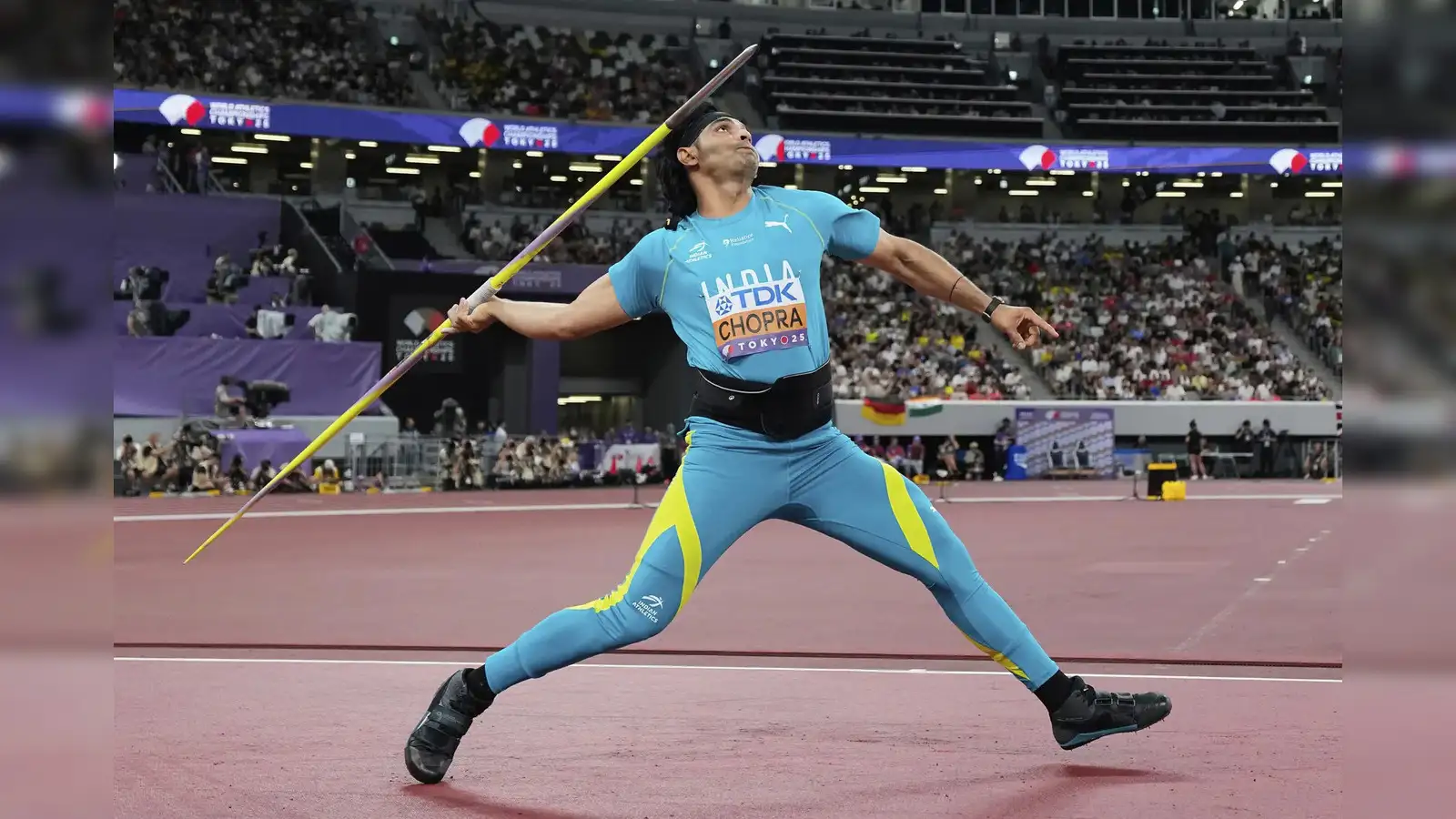
That development could be important for the long-term growth of the discipline. A strong national programme benefits when several athletes compete at high levels because they create greater domestic competition and provide younger throwers with visible examples of what is possible. The growth of interest can also encourage better coaching, improved training environments and more participation at junior levels.
What Fans Should Watch in Future Championships
Future editions of the javelin world athletics championships are likely to remain highly competitive because the event combines established champions with younger athletes seeking their first major breakthrough. Fans should pay attention not only to the final distances but also to qualification performances, personal bests, season bests and the progression of athletes across the competition.
A thrower who records a personal best during qualification may enter the final with increased confidence, while an established star may need to adjust strategy if early attempts do not produce the expected distance. This is part of what makes javelin unpredictable and engaging.
The development of emerging athletes will also be worth following. Tokyo showed that championship medals are not automatically determined by reputation. Angulo and Sietiņa both produced standout performances in the women’s final, while Sachin Yadav’s personal best placed him fourth in the men’s competition.
Conclusion
The javelin world athletics championships represent much more than a contest to see who can throw the farthest. They showcase a combination of athletic power, speed, precision, tactical judgment and mental control. The 2025 Tokyo edition demonstrated this clearly, with Keshorn Walcott winning the men’s title at 88.16 metres and Juleisy Angulo claiming the women’s crown with a national-record 65.12-metre throw. The event is also becoming increasingly global. Athletes from multiple continents are challenging established names, personal and national records are being set, and emerging competitors are making their presence felt on the biggest stage. Tokyo’s results showed that reputation alone cannot determine a championship outcome, because athletes still have to execute when the pressure is highest.

