
Women’s cricket has developed rapidly over the last decade, and few contests represent that growth better than the rivalry between India and Australia. Whenever these two sides meet, the match usually brings together experienced campaigners, emerging stars, tactical battles and intense pressure. The contest is no longer simply about one team dominating another; it has become a fascinating competition between two sides with different strengths and increasingly high expectations.
The India vs Australia Women rivalry has become particularly important because both teams regularly compete for major international honours. Australia have established themselves as one of the strongest teams in women’s cricket, while India have continued to build a deeper and more competitive squad capable of challenging the best teams across formats. Their meetings therefore attract significant attention from fans who want to see how India’s developing depth compares with Australia’s long-established consistency.
The latest chapter of this rivalry has already produced several important matches in 2026. India toured Australia for T20Is, ODIs and a Test, while both teams later met at the 2026 ICC Women’s T20 World Cup. Australia won the World Cup meeting by six wickets after chasing India’s 170/4 with 172/4, showing once again how effectively they can handle pressure in high-stakes matches.
Why India vs Australia Women Is Such a Major Rivalry
The importance of India vs Australia Women goes beyond the result of an individual match. Australia have traditionally set a very high standard in women’s international cricket through their strong domestic structure, athletic fielding, powerful batting and depth in bowling. India, meanwhile, have developed rapidly and have built a generation of players capable of competing against Australia in all conditions.
Another reason this rivalry is so interesting is the contrast in playing styles. Australian cricket has often been associated with aggressive intent, powerful stroke play and relentless pressure. India possess a combination of technically skilled batters, quality spin options and increasingly versatile pace resources. When those strengths collide, the result can change quickly.
There is also a psychological element. Players from both teams understand that small moments can decide these matches. A dropped catch, an over containing several boundaries, a successful bowling change or a partnership under pressure can completely change the direction of the game. This makes the rivalry especially appealing to viewers because even apparently comfortable positions can disappear quickly.
The Recent 2026 India and Australia Contest
The 2026 tour of Australia provided an excellent example of how closely these teams can compete across formats. The T20I series consisted of three matches, with India winning the first and third games while Australia won the second. India therefore finished that series with a 2–1 advantage. The ODI series presented a different challenge. Australia won the first two matches before completing the series with a commanding victory in the third ODI. The final match saw Australia score 409/7, while India were dismissed for 224, resulting in a 185-run victory.
The one-off Test in Perth also demonstrated Australia’s strength in longer-format cricket. Australia won by 10 wickets after India were dismissed for 198 and 149, while Australia reached 323 in their first innings before completing a straightforward chase.
| Format | Key 2026 Outcome | Major Takeaway |
|---|---|---|
| T20I | India won series 2–1 | India showed strong adaptability in the shortest format |
| ODI | Australia won all three matches | Australia demonstrated considerable batting and bowling depth |
| Test | Australia won by 10 wickets | Australia remained highly effective in longer-format cricket |
| T20 World Cup | Australia won by 6 wickets | Australia handled a major-pressure chase successfully |
These results make the India vs Australia Women rivalry particularly intriguing because neither side has a simple advantage across every format. India showed that they could challenge Australia in T20 cricket during the early part of the year, while Australia demonstrated their superiority in the ODI and Test contests. The later World Cup encounter added another important chapter to that story.
Key Players Who Can Change the Match
India’s Batting Strength
India’s batting lineup has several players capable of changing the momentum of a match within a few overs. The top order is especially important because early partnerships can determine whether India are able to establish a competitive total or chase confidently.
Experienced batters bring an understanding of pressure situations, while younger players can provide attacking intent. The challenge for India is finding the right balance between controlled accumulation and aggressive scoring. Against Australia, simply surviving the opening phase is often not enough. India need batters who can convert starts into substantial scores.
The middle order also plays an important role. In T20 cricket, a strong middle order allows a team to accelerate during the final overs. In ODIs, it becomes even more important because partnerships need to be flexible enough to respond to changing match situations.
Australia’s All-Round Depth
Australia have traditionally benefited from having several players capable of contributing in more than one discipline. This gives the captain additional tactical options, particularly when conditions change during a match.
Ellyse Perry remains one of the most recognizable names associated with the rivalry, while players such as Annabel Sutherland, Ashleigh Gardner, Tahlia McGrath and Beth Mooney add considerable experience and versatility. Perry was particularly influential during the 2026 T20 World Cup meeting, scoring 56 from 38 deliveries as Australia successfully chased India’s total at Lord’s.
That kind of depth creates a difficult tactical problem for opponents. If a specialist batter struggles, another player can take responsibility. If the bowling unit needs support, all-rounders can provide additional overs. Australia’s ability to distribute responsibility across the squad has been one of their major strengths.
How India Can Challenge Australia
India’s best opportunity against Australia is to avoid allowing the Australian side to control the tempo for long periods. Australia are particularly dangerous when they are able to establish momentum with the bat and maintain pressure with disciplined bowling.
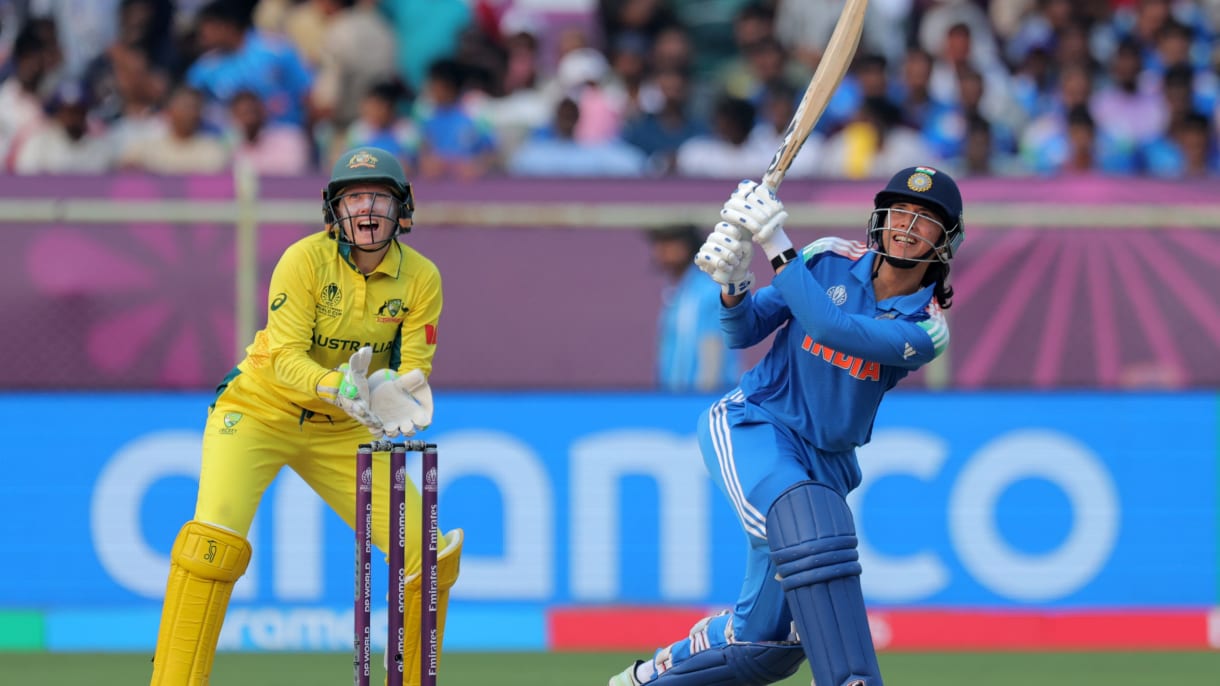
India can challenge them through several important areas:
- Building partnerships rather than depending on one individual performance.
- Maintaining attacking intent during the middle overs.
- Using spin intelligently when conditions favour slower bowling.
- Improving consistency in catching and ground fielding.
The biggest factor, however, is adaptability. Australia have the ability to punish predictable tactics, so India need to be prepared to change their approach according to pitch conditions, match situation and individual matchups.
Australia’s Tactical Advantage
Australia’s biggest strength is arguably their ability to remain composed when the game becomes uncomfortable. They rarely need everything to go perfectly before they can recover. A strong bowling spell can bring them back into a game, while their deep batting lineup can turn a difficult chase into a manageable one.
The 2026 World Cup match demonstrated this clearly. India posted 170/4 after choosing to bat first, but Australia reached 172/4 in 19 overs. The chase was built around controlled aggression rather than reckless hitting, with Perry playing a central role.
This ability to manage pressure is particularly valuable in knockout competitions. World Cup matches can create a completely different atmosphere from bilateral series, and Australia have extensive experience operating in those conditions.
The Importance of Bowling and Fielding
Batting often receives the most attention, but bowling and fielding can determine the outcome of an India vs Australia Women match. Against strong batting lineups, teams cannot afford loose deliveries or missed opportunities.
India’s spin resources can be especially useful on slower pitches, where changes of pace and flight can make scoring difficult. Their pace attack also needs to create early breakthroughs because Australia’s batting depth makes it difficult to dominate the middle and lower order.
Australia, meanwhile, have repeatedly shown the value of disciplined bowling plans. Their bowlers generally aim to build pressure through consistent areas rather than depending entirely on spectacular deliveries. Fielding then reinforces that pressure by preventing easy singles and converting half-chances into wickets.
In a closely fought game, two or three fielding moments can be worth as much as a major batting partnership. This is why modern women’s cricket increasingly places enormous importance on athletic fielding and boundary protection.
T20 Cricket Has Added Another Dimension
The shortest format has made this rivalry even more unpredictable. In T20 cricket, one exceptional over can change the entire match. A team that appears comfortably ahead after 15 overs can suddenly face a difficult finish after a cluster of wickets.
The 2026 T20I series in Australia showed how competitive the two sides can be. India won the opening match by 21 runs under the DLS method, Australia responded with a 19-run victory in the second game, and India closed the series by winning the third match by 17 runs.
This type of series highlights why tactical flexibility is essential. Teams need aggressive batters, reliable death bowling and players capable of performing multiple roles. Captains also have less room for error because the game moves so quickly.
For fans following India vs Australia Women, T20 matches therefore offer some of the most dramatic moments. The balance can shift within a handful of deliveries, making every over meaningful.
ODI Cricket Requires a Different Approach
One-day cricket places greater emphasis on patience, partnership building and resource management. A batter who attacks too early can expose the middle order, while a team that scores too slowly can leave itself with an impossible finishing requirement.
Australia’s 2026 ODI performance against India demonstrated the importance of converting strong starts into huge totals. Their third ODI total of 409/7 was built on sustained pressure and a high scoring rate before their bowlers completed the job.
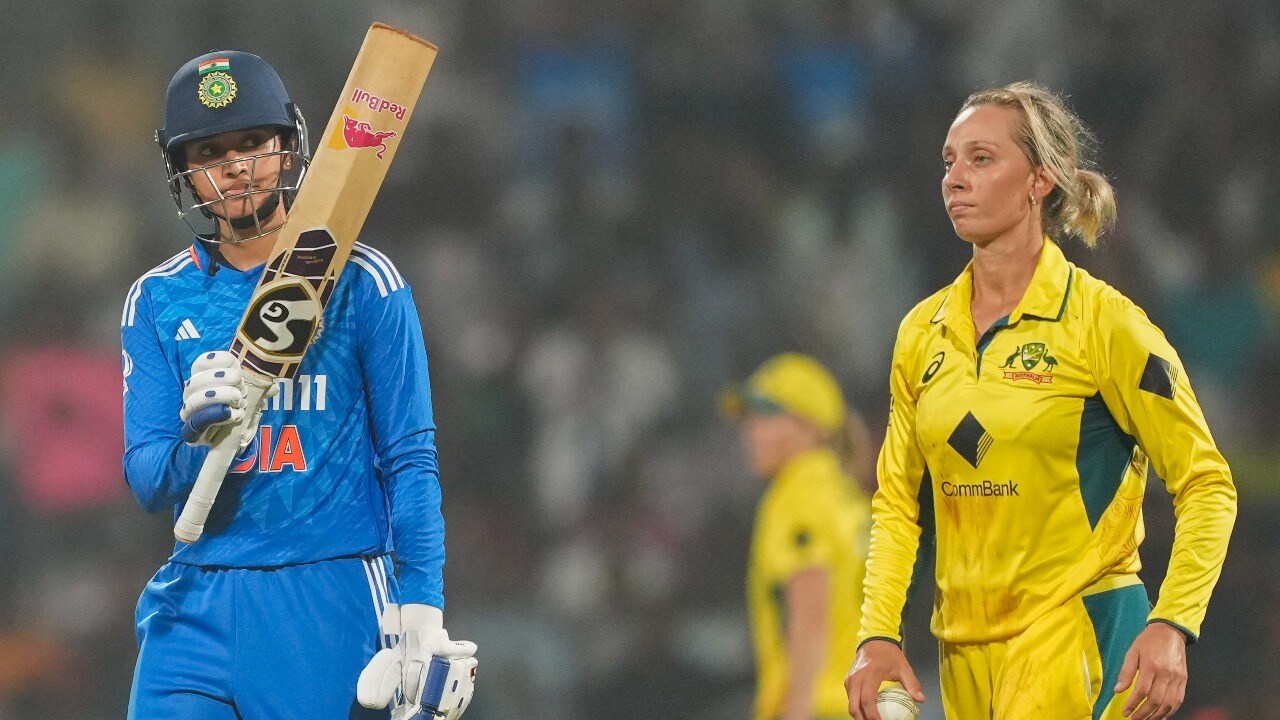
For India, the lesson from such matches is not simply to attack harder. Instead, they need to manage phases better. Building a stable platform in the first 20 overs, maintaining momentum through the middle phase and preserving wickets for the final overs can create a much more competitive total.
What Makes Future Meetings So Interesting
The rivalry is likely to remain important because both teams continue to develop. India have increased the depth available to their national setup, while Australia continue to benefit from a highly competitive cricketing system. Their recent encounters have also shown that results can vary significantly depending on the format.
The 2026 calendar has already included major encounters between the teams, and the broader women’s international schedule continues to provide opportunities for both sides to prepare for future global competitions. Australia’s own cricket calendar also reflects how much attention is being given to women’s international cricket, with major tours and competitions continuing throughout the season.
Another interesting factor is the emergence of players who can become future stars of the rivalry. Established names may dominate headlines today, but younger players are increasingly capable of influencing international matches. As these players gain experience, the tactical battle between India and Australia should become even more sophisticated.
Why Fans Continue to Follow the Rivalry
The popularity of India vs Australia Women comes from more than statistics. Supporters follow these games because there is a genuine sense of occasion whenever the teams meet. The contests combine international prestige with individual stories, from experienced players trying to deliver under pressure to younger cricketers making their mark on the world stage.
The rivalry also represents the broader growth of women’s cricket. Matches between India and Australia are now treated as major sporting events rather than secondary fixtures. Large audiences, stronger domestic competitions and increased investment have helped create an environment where players can compete at a much higher level.
For younger fans, these matches also provide role models and examples of elite sporting performance. The increasing visibility of women’s cricket means that future generations will likely see these players as central figures in the sport rather than exceptions to the traditional cricket narrative.
Conclusion
The India vs Australia Women rivalry has become one of the most compelling contests in international women’s cricket. Australia bring experience, depth and an outstanding record in major competitions, while India continue to develop into a side capable of challenging them across formats. The contrasting strengths of the two teams make every meeting tactically interesting. The events of 2026 have reinforced that competitive nature. India won the T20I series in Australia, Australia dominated the ODI and Test contests, and Australia later defeated India in the Women’s T20 World Cup.

